FTL1 Iron Protein Reversed Memory Loss in Old Mice

FTL1 Iron Protein Reversed Old Mouse Memory Loss

FTL1 Iron Protein Reversed Old Mouse Memory Loss TL;DR: In old mice, an iron-associated hippocampal protein called FTL1 rose with cognitive decline, made young brains look older when boosted, and improved old-mouse cognition when targeted. Key Findings Aged hippocampi carried more FTL1: Transcriptomic and mass-spectrometry analyses found neuronal FTL1 increased in the hippocampus of old …

Read more

Amygdala Astrocytes Helped Store and Extinguish Fear Memories

How Astrocytes Help the Amygdala Store Fear Memories

How Astrocytes Help the Amygdala Store Fear Memories TL;DR: Amygdala astrocytes were not passive support cells: their calcium signals tracked learned fear states and were required for neuronal fear-memory representations in mice. Key Findings In vivo BLA imaging across multiple mouse cohorts: The team combined astrocyte and neuronal calcium imaging, electrophysiology, and circuit manipulations in …

Read more

Loneliness Impaired Memory Without Accelerating 6-Year Decline

Loneliness Lowered Memory Without Speeding Decline

Loneliness Lowered Memory Without Speeding Decline TL;DR: In 10,217 older Europeans, loneliness was linked to lower immediate and delayed recall at baseline, but it did not make memory decline faster over 6 years. Key Findings 10,217 SHARE participants: The analysis included adults aged 65 to 94 from 12 European countries who participated in waves 5, …

Read more

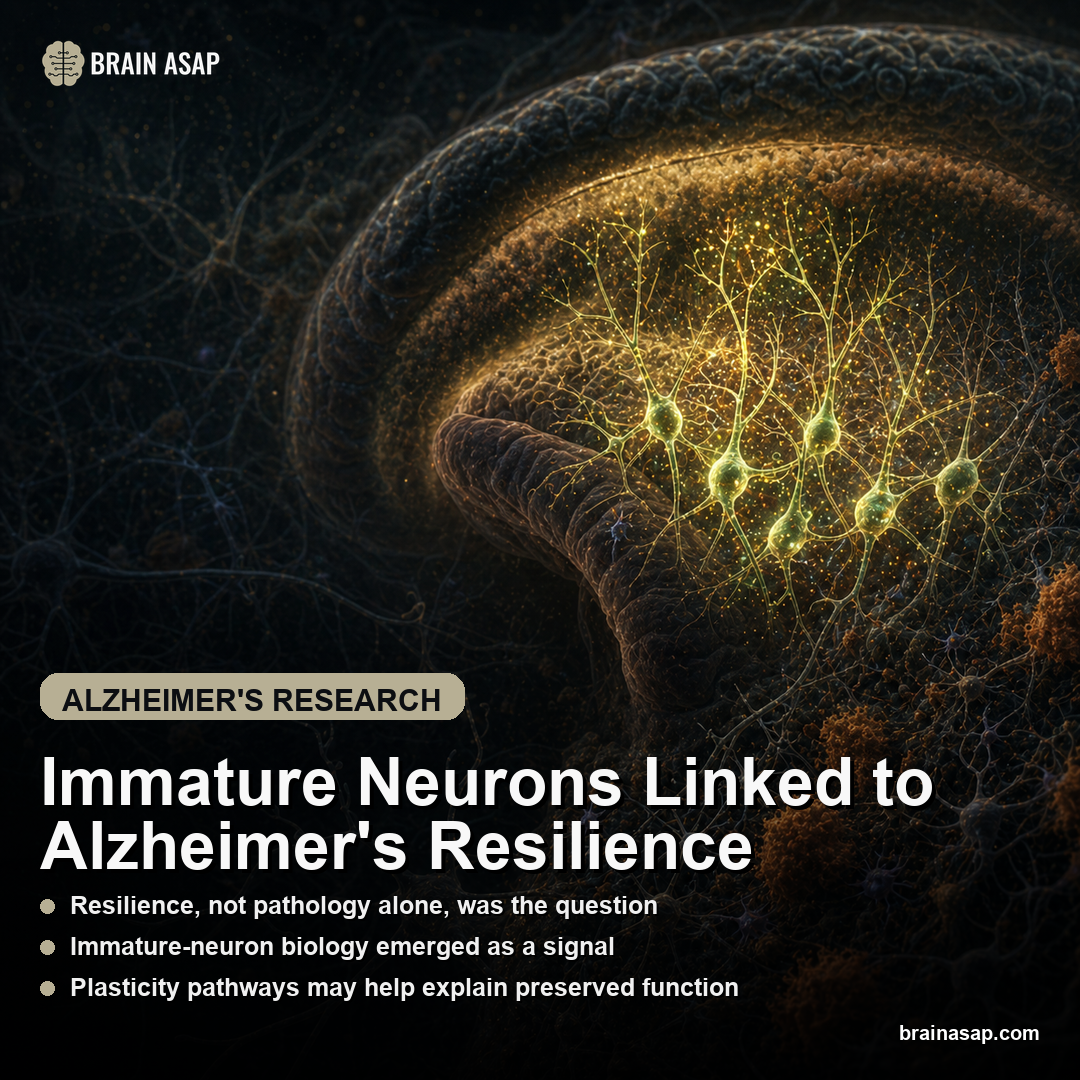
Immature Hippocampal Neurons Marked Cognitive Resilience in Alzheimer’s Brains

Immature Neurons Linked to Alzheimer’s Resilience

Immature Neurons Linked to Alzheimer’s Resilience TL;DR: A 2026 Cell Stem Cell study used single-nucleus RNA sequencing of aged human hippocampus tissue and found rare immature neurons in healthy, Alzheimer’s, and dementia-resilient brains. The important signal was not simply whether these cells existed. It was how their gene activity changed in Alzheimer’s disease and in …

Read more

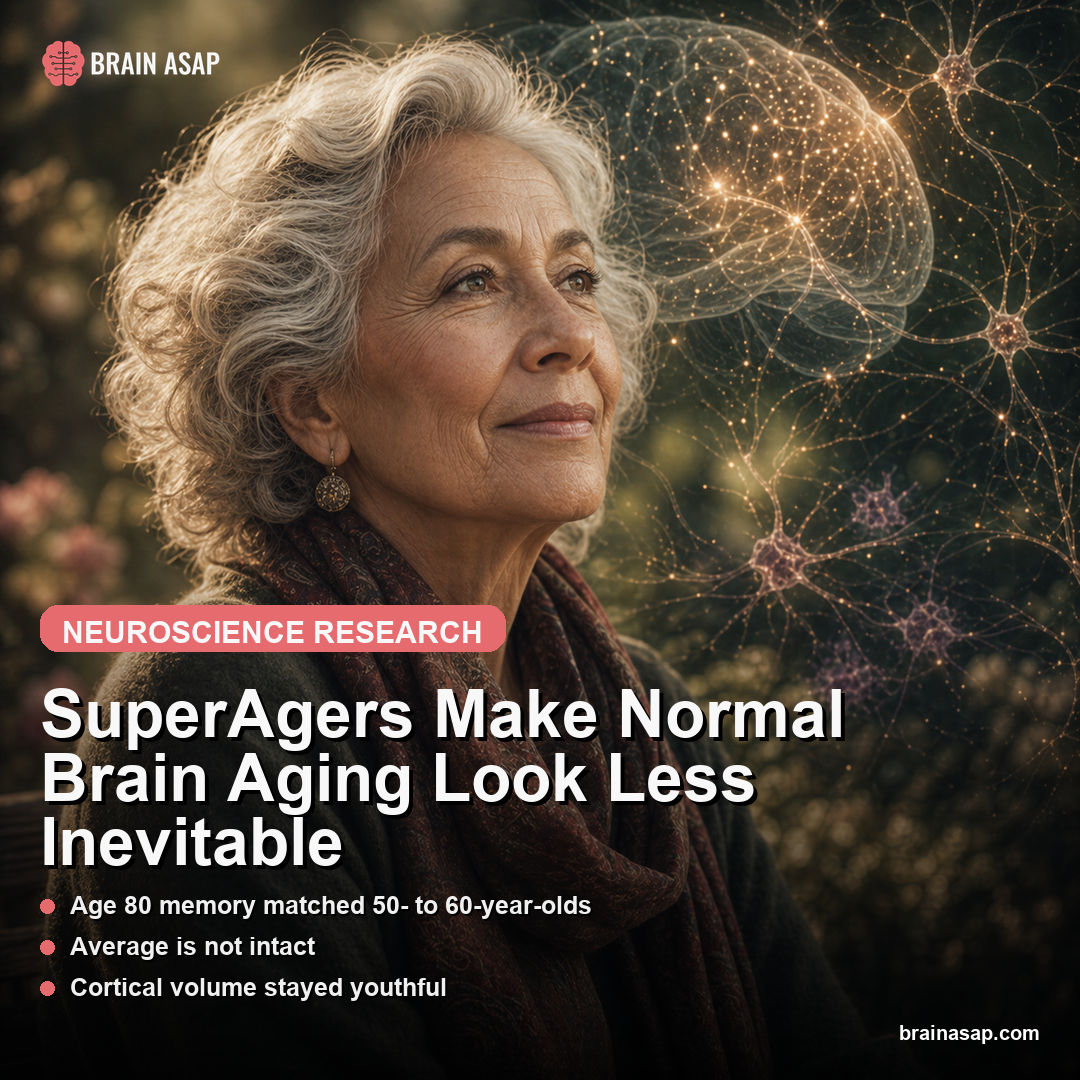
SuperAgers Kept Youthful Memory With Preserved Cortex and Larger Entorhinal Neurons

SuperAgers Reveal Biology of Preserved Memory

SuperAgers Reveal Brain Biology of Preserved Memory TL;DR: Octogenarians who recall words like 50-year-olds carry a distinct brain profile: preserved cortical volume, a cingulate cortex thicker than younger adults, larger entorhinal neurons, fewer inflammatory microglia, and more von Economo neurons — the biology is real, not just motivational. Key Findings Age-80 memory matched 50-to-60-year-olds: SuperAgers …

Read more

Lifetime Cognitive Enrichment Delayed Alzheimer’s Dementia

Lifetime Cognitive Enrichment Delayed Alzheimer's Dementia

Lifetime Cognitive Enrichment Delayed Alzheimer’s Dementia TL;DR: In 1,939 Rush Memory and Aging Project participants, higher lifetime cognitive enrichment was linked to 38% lower Alzheimer’s dementia hazard and about 5 years later dementia onset. Key Findings 1,939 dementia-free adults: Participants were older adults from Northeastern Illinois in the Rush Memory and Aging Project, with a …

Read more

L-DOPA Partly Rescued Entorhinal Memory Failure in Alzheimer’s Mice

Dopamine Disruption May Start Alzheimer's Memory Failure

Dopamine Disruption May Start Alzheimer’s Memory Failure TL;DR: In an Alzheimer’s mouse model, early memory failure tracked a broken dopamine signal into the lateral entorhinal cortex, and both optogenetic dopamine reactivation and L-DOPA partially restored learning. Key Findings Early learning slipped: Young APP knock-in mice reached 78.6% correct trials in the final learning block, compared …

Read more

Cannabis via Vaporized THC (20-40 mg) Caused Memory Impairment

Cannabis Did Not Just Blur Word Lists. It Hit Everyday Memory Too

Cannabis Did Not Just Blur Word Lists. It Hit Everyday Memory Too TL;DR: A randomized vaporized-THC trial found broad acute memory impairment, including false memories, prospective memory, source memory, and temporal order memory, with no meaningful dose split between 20 and 40 mg. Key Findings 120 regular cannabis users randomized: Participants vaporized placebo cannabis, 20 …

Read more

How the Human Brain Stores Memory: Content vs. Context Neurons

How the Brain Separates What We Remember from Why We Remember It TL;DR: The brain stores content (what you remember) and context (when/where) in separate neural populations linked by real-time coordination, not pre-wired conjunctive cells—a design that trades speed for flexibility, allowing you to recognize a friend’s face across any setting or apply a principle …

Read more

New Blood Test Detects Alzheimer’s Disease with 83% Accuracy Years Before Symptoms

Blood Test Detects Alzheimer’s with 83% Accuracy TL;DR: A new blood test using three misfolded plasma proteins can identify Alzheimer’s disease with 83.44% accuracy, outperforming conventional biomarkers and offering a non-invasive screening tool years before cognitive symptoms appear. The holy grail of Alzheimer’s research isn’t a cure—yet. It’s catching the disease before memory starts to …

Read more