TL;DR: A 2026 study in the European Journal of Nuclear Medicine and Molecular Imaging reported that adolescent bipolar II depression showed lower thalamic structural-functional connectivity coupling and glucose metabolism than adolescent major depressive disor…
Read article ↗
TL;DR: A 2026 systematic review and meta-analysis in Brain, Behavior, & Immunity – Health found that adding celecoxib to antidepressants was linked to lower depressive symptom scores in 7 small trials, but the efficacy evidence was rated very low certainty. Ke…
Read article ↗
TL;DR: A 2026 review in International Journal of Nanomedicine argued that depression nanomedicine should move beyond blood-brain-barrier delivery alone and be judged by target engagement, neuroimmune-barrier-plasticity effects, safety, manufacturability, and p…
Read article ↗
TL;DR: A 2026 study in Translational Psychiatry found that ketamine changed EEG-derived high-order brain interactions in late-life treatment-resistant depression, and a 24-hour increase in alpha-band redundancy tracked greater depression improvement by Day 7.…
Read article ↗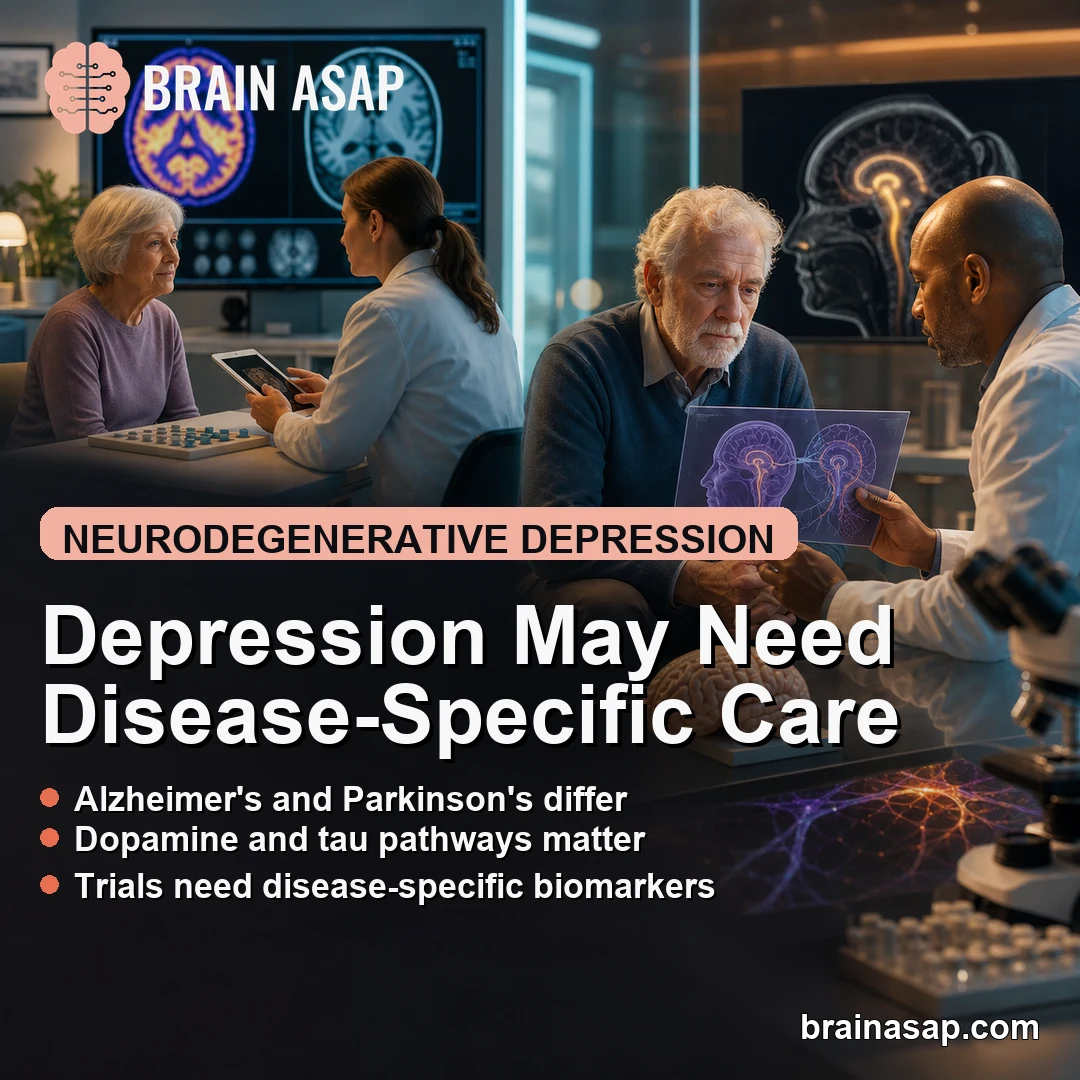
TL;DR: A 2026 narrative review in Molecular Psychiatry argues that depression in Alzheimer’s disease and Parkinson’s disease follows disease-specific brain mechanisms, while standard antidepressant evidence remains weak in these neurodegenerative populations.…
Read article ↗
TL;DR: A 2026 meta-analysis in Journal of Medical Internet Research did not find a statistically significant reduction in Patient Health Questionnaire-9 (PHQ-9) depression scores with AI-driven chatbots, but emotionally responsive, structured, and frequent int…
Read article ↗
TL;DR: A 2026 study in International Clinical Psychopharmacology described a 40-year-old man whose dysphoria, anhedonia, amotivation, and fatigue appeared soon after olanzapine was changed to olanzapine-samidorphan and resolved after he returned to olanzapine…
Read article ↗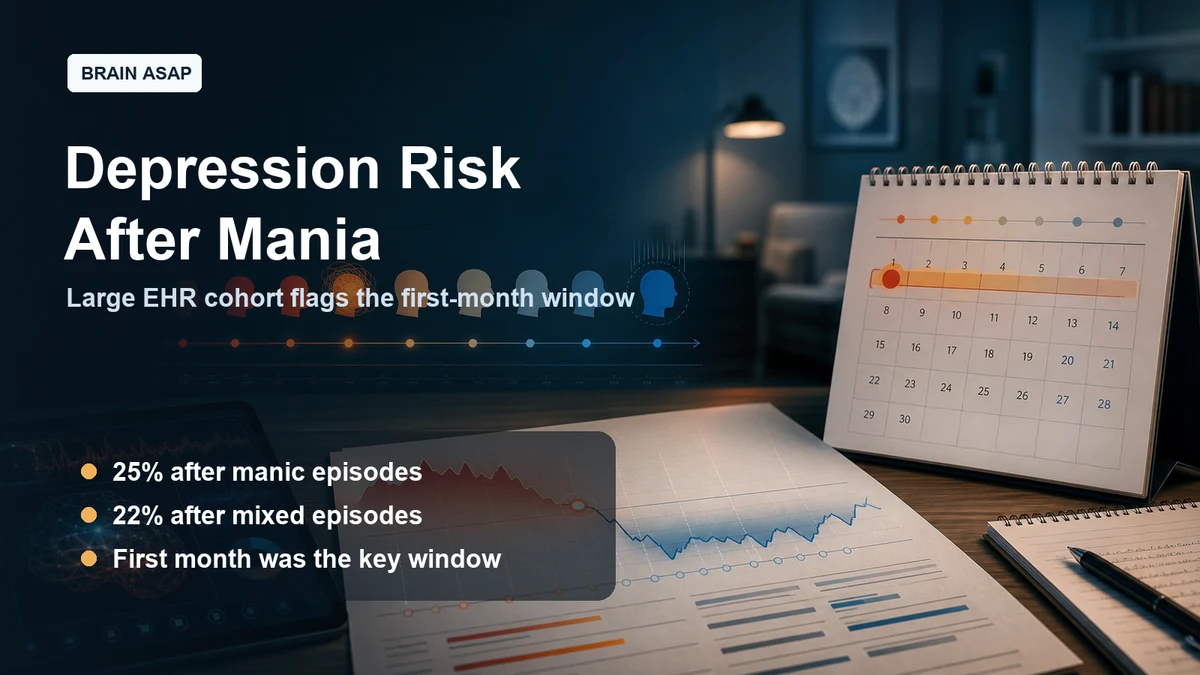
TL;DR: A 2026 medRxiv retrospective cohort study found that depression often followed bipolar manic or mixed episodes quickly, with 25% of manic episodes and 22% of mixed episodes transitioning to depression within 1 month. Key Findings First-month risk window…
Read article ↗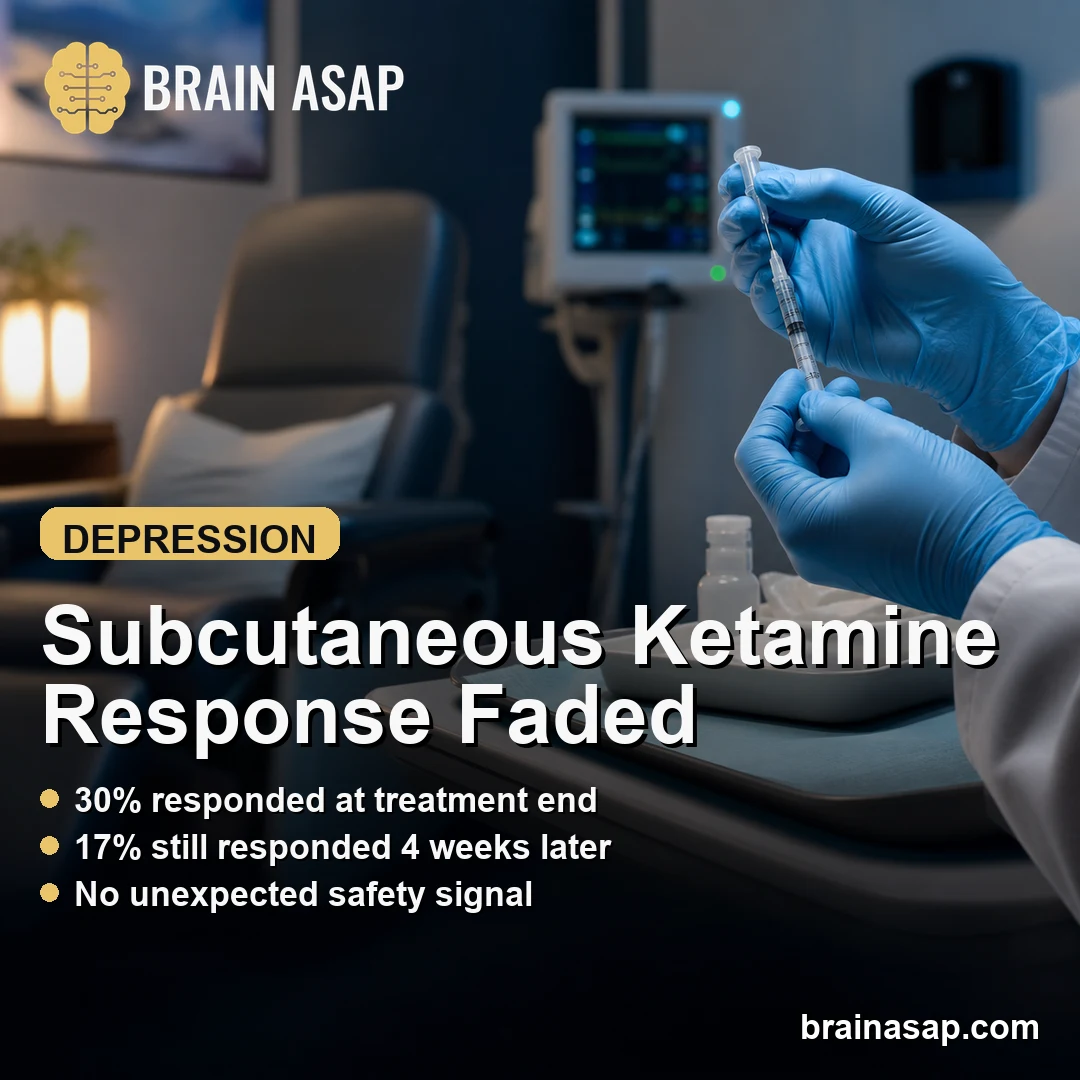
TL;DR: A 2026 study in The British Journal of Psychiatry found that 4 weeks of twice-weekly subcutaneous racemic ketamine helped a minority of people with treatment-resistant depression, but response fell from 30% at treatment end to 17% 4 weeks later. Key Fin…
Read article ↗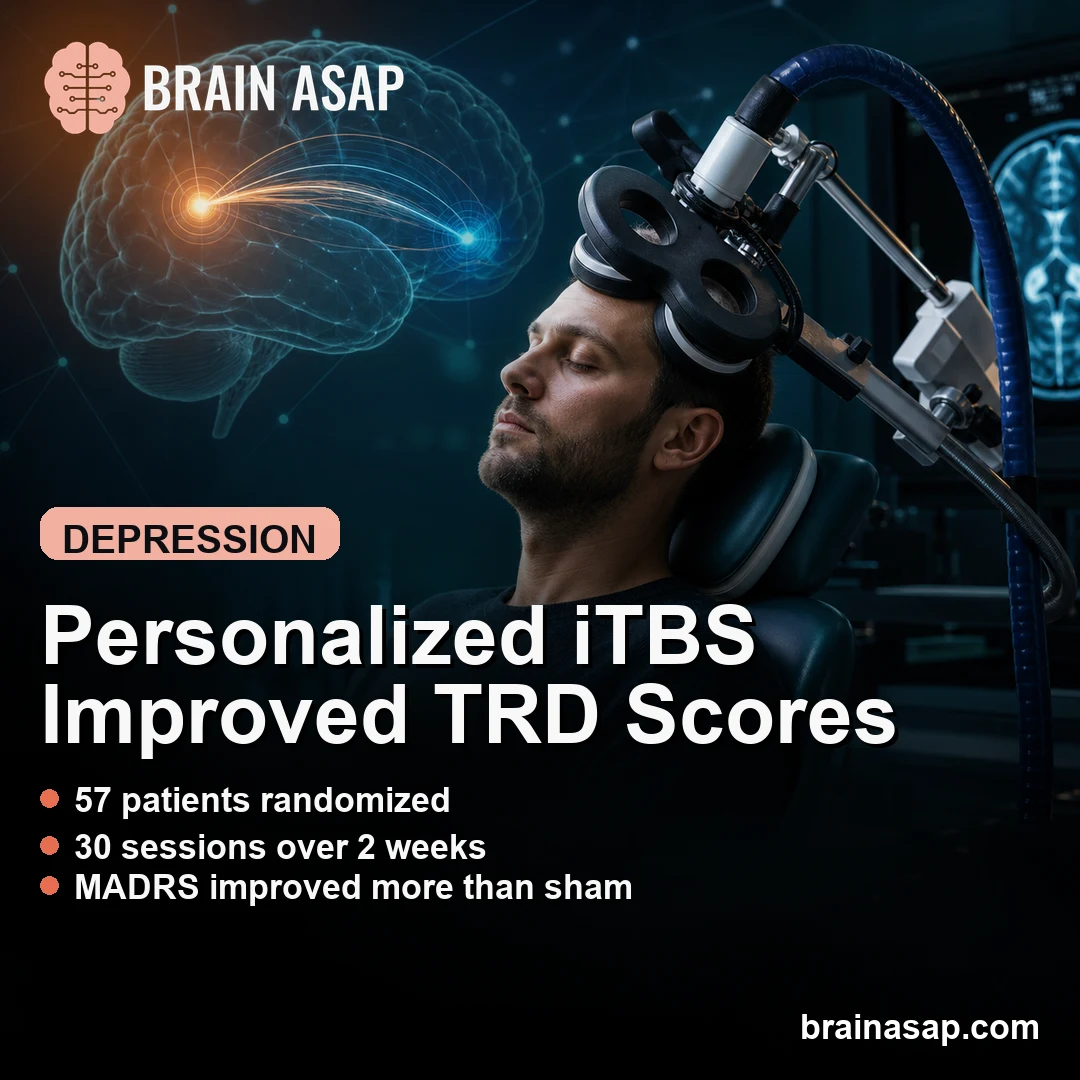
TL;DR: A 2026 randomized trial posted to medRxiv found that connectivity-guided accelerated intermittent theta-burst stimulation added to inpatient care improved treatment-resistant depression scores more than sham stimulation over 2 weeks. Key Findings 57 ran…
Read article ↗