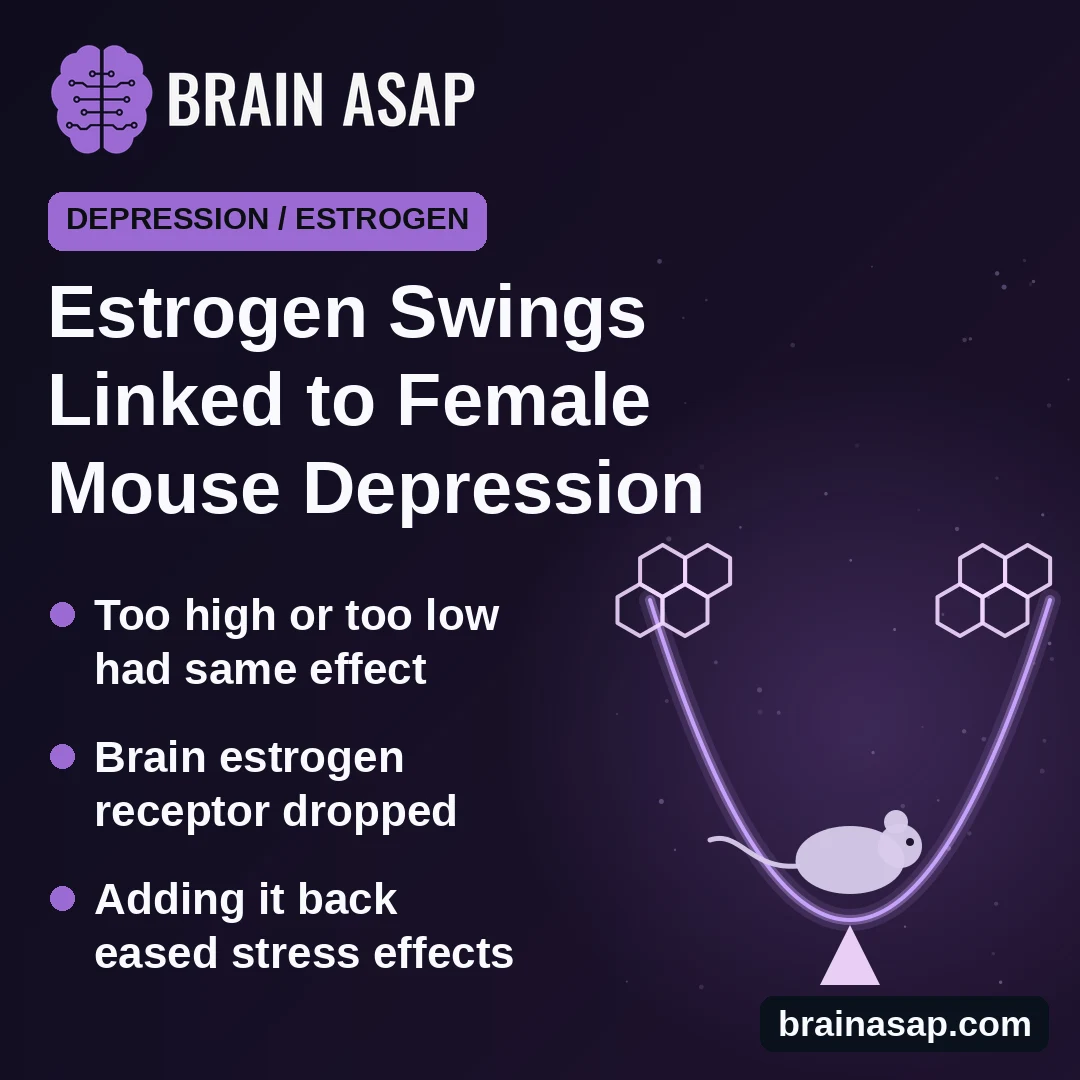
TL;DR: In female mice, both too little and too much estrogen led to depression-like and anxious behavior, and both lowered one estrogen receptor in a mood-related brain area. Boosting that receptor eased the effects of stress. Key Findings U-shaped pattern in…
Read article ↗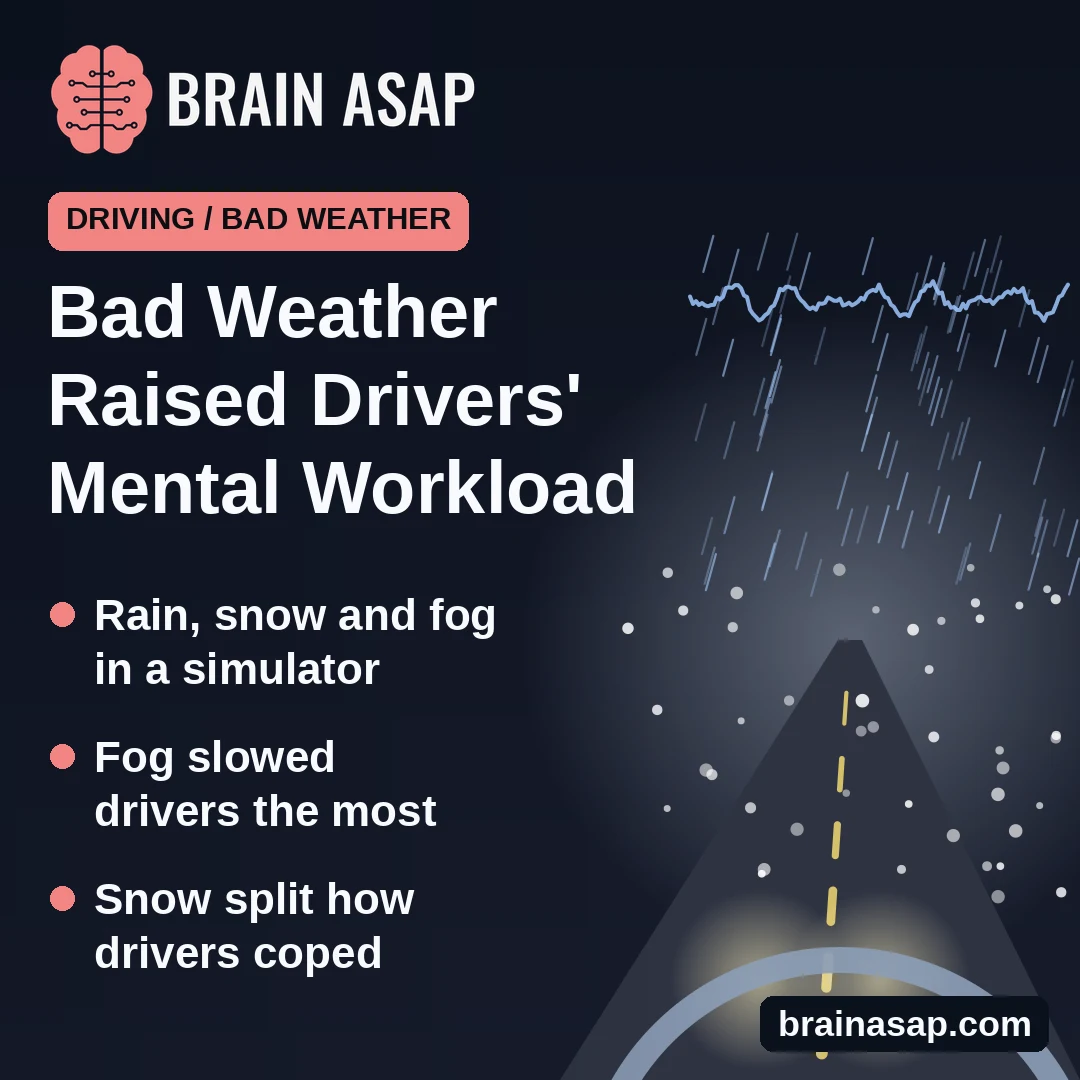
TL;DR: In a driving simulator, 30 drivers felt more strained and tired in rain, snow or fog than in clear weather. Each kind of bad weather showed up differently, with drivers slowing down most in fog. Key Findings Workload up in all bad weather: Scores rose 1…
Read article ↗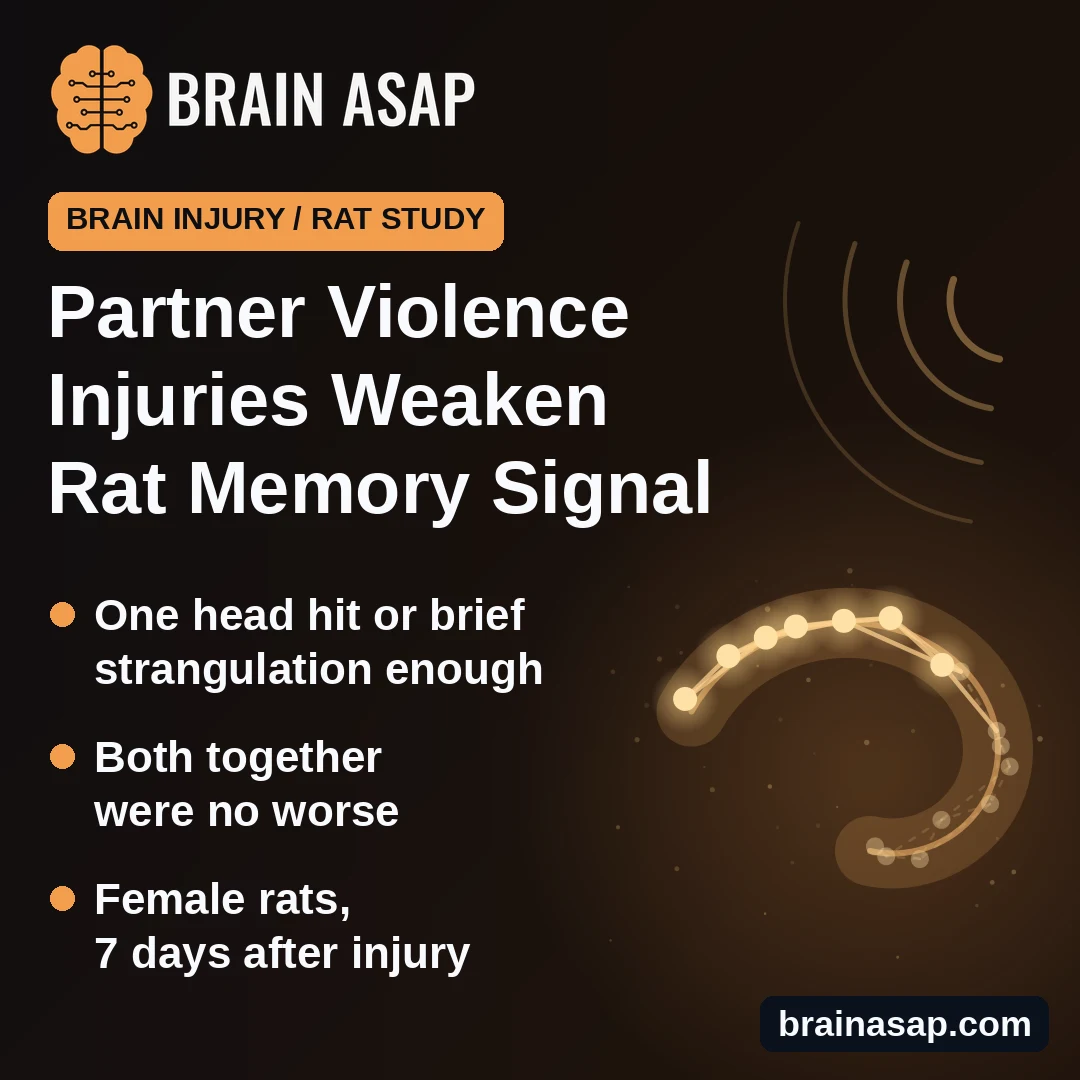
TL;DR: In female rats, a single concussion-type head hit or a brief strangulation weakened a brain-cell signal linked to memory a week later. Getting both injuries together was no worse than getting one. Key Findings 51 female rats, 4 groups: No injury, head h…
Read article ↗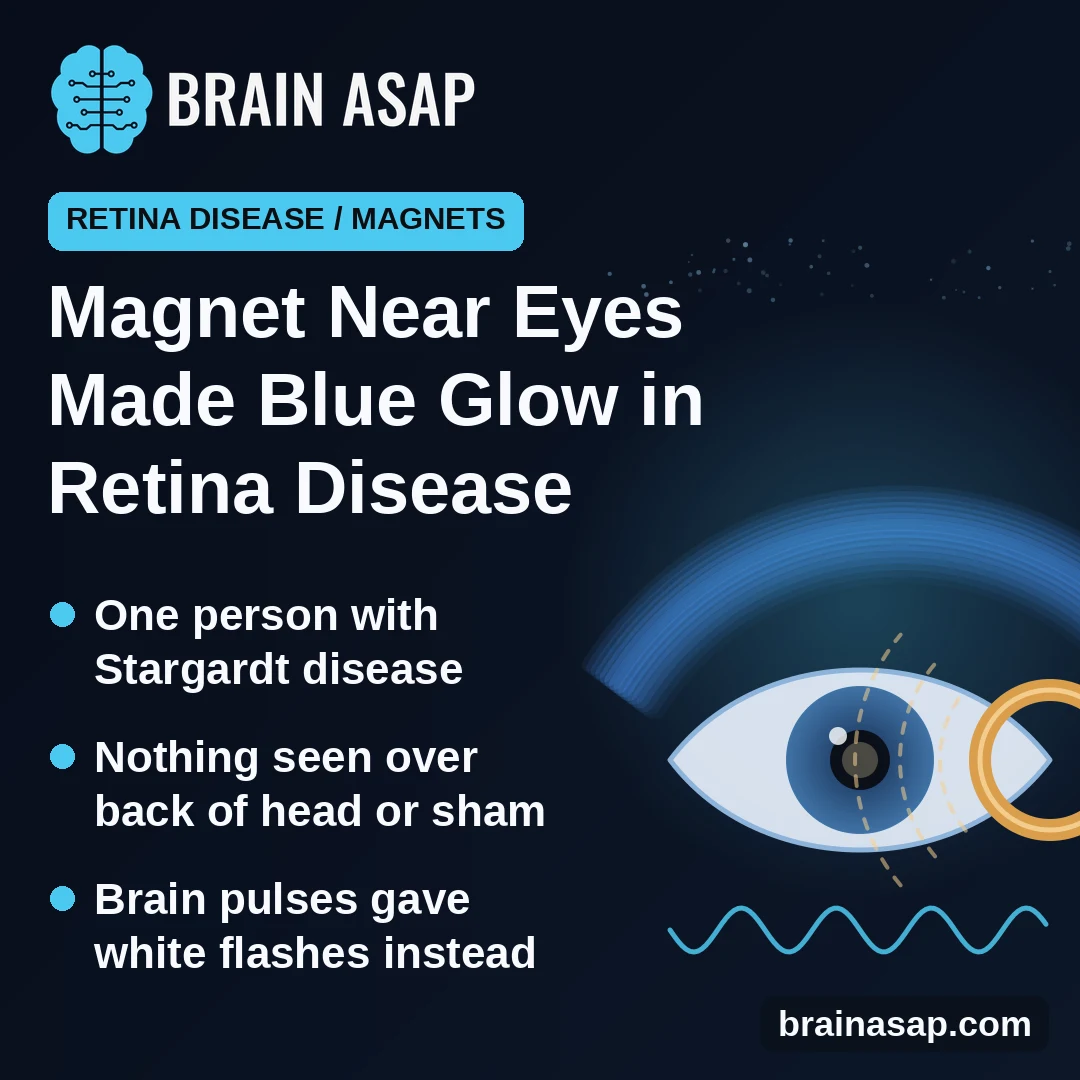
TL;DR: A person with severe inherited retina disease saw a wide blue glow each time a weak, humming magnetic field was aimed near the eyes, but nothing when it was aimed at the back of the head or switched off. It's a single-person experiment that points to su…
Read article ↗
TL;DR: A review of 10 years of research found no consistent evidence that radio waves from cell phones or phone towers harm children or pregnancies. Some studies did find links to sleep, behavior or birth size, but most relied on self-reported phone use and co…
Read article ↗
TL;DR: In 20 healthy young adults, one session of LiuZiJue, a Chinese breathing practice done with six spoken sounds, was followed by faster answers on a color-word test, compared with sitting quietly with eyes closed. Accuracy didn't change, and the speed-up…
Read article ↗
TL;DR: In 21 stroke survivors with swallowing problems, one acupuncture session at a point under the chin was linked to more activity in movement and touch areas on the healthy side of the brain, compared with 29 healthy adults. There was no fake-needle compar…
Read article ↗
TL;DR: In diabetic rats, giving the antidepressant nortriptyline together with tramadol or ibuprofen eased pain behavior at much lower doses than each drug alone. The combinations worked better together than their separate effects would predict, but this was a…
Read article ↗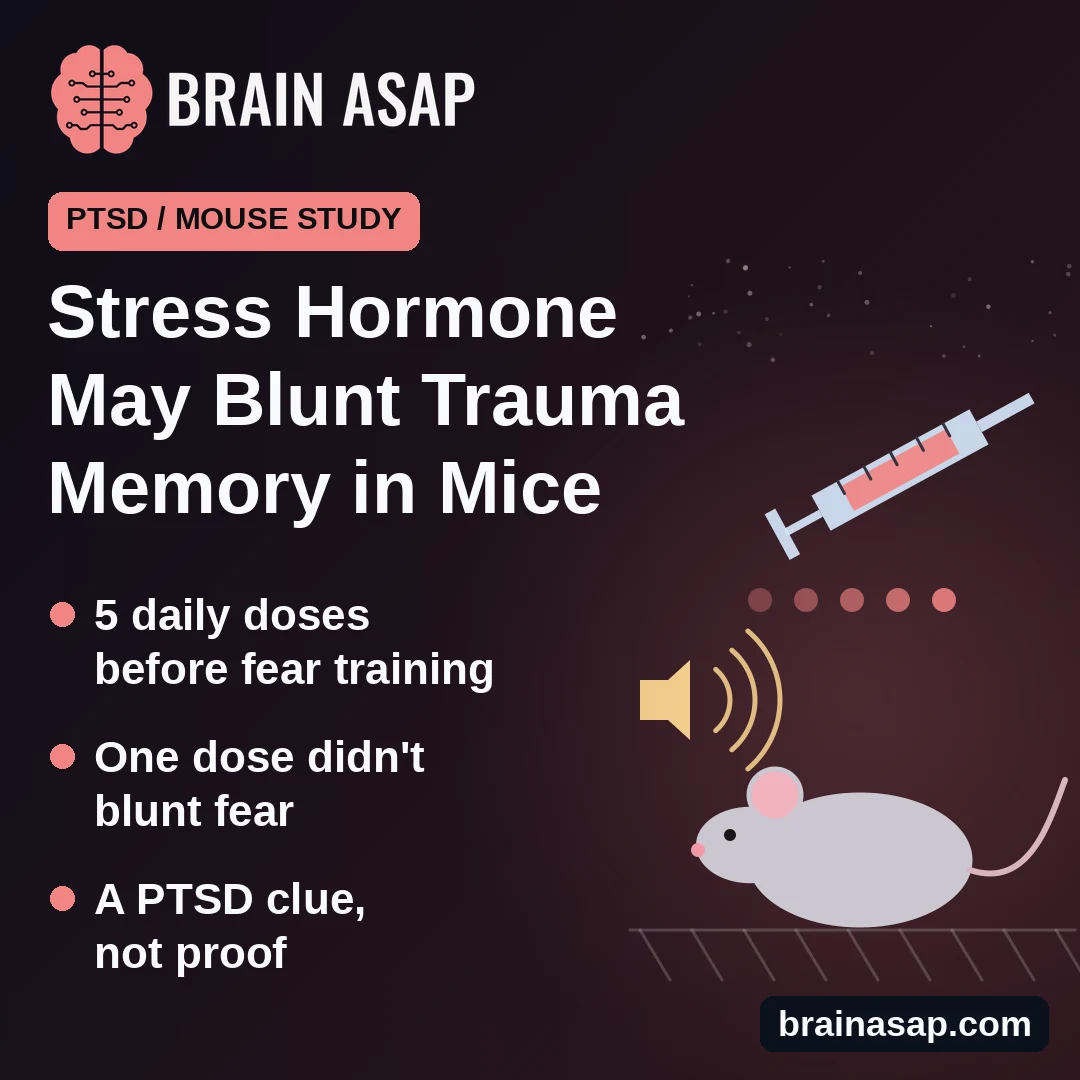
TL;DR: Mice given a stress hormone daily for 5 days before a frightening experience didn't show the usual rise in fear the next day, while mice given a single dose just beforehand did. The finding hints that long-term stress before trauma may change how fear m…
Read article ↗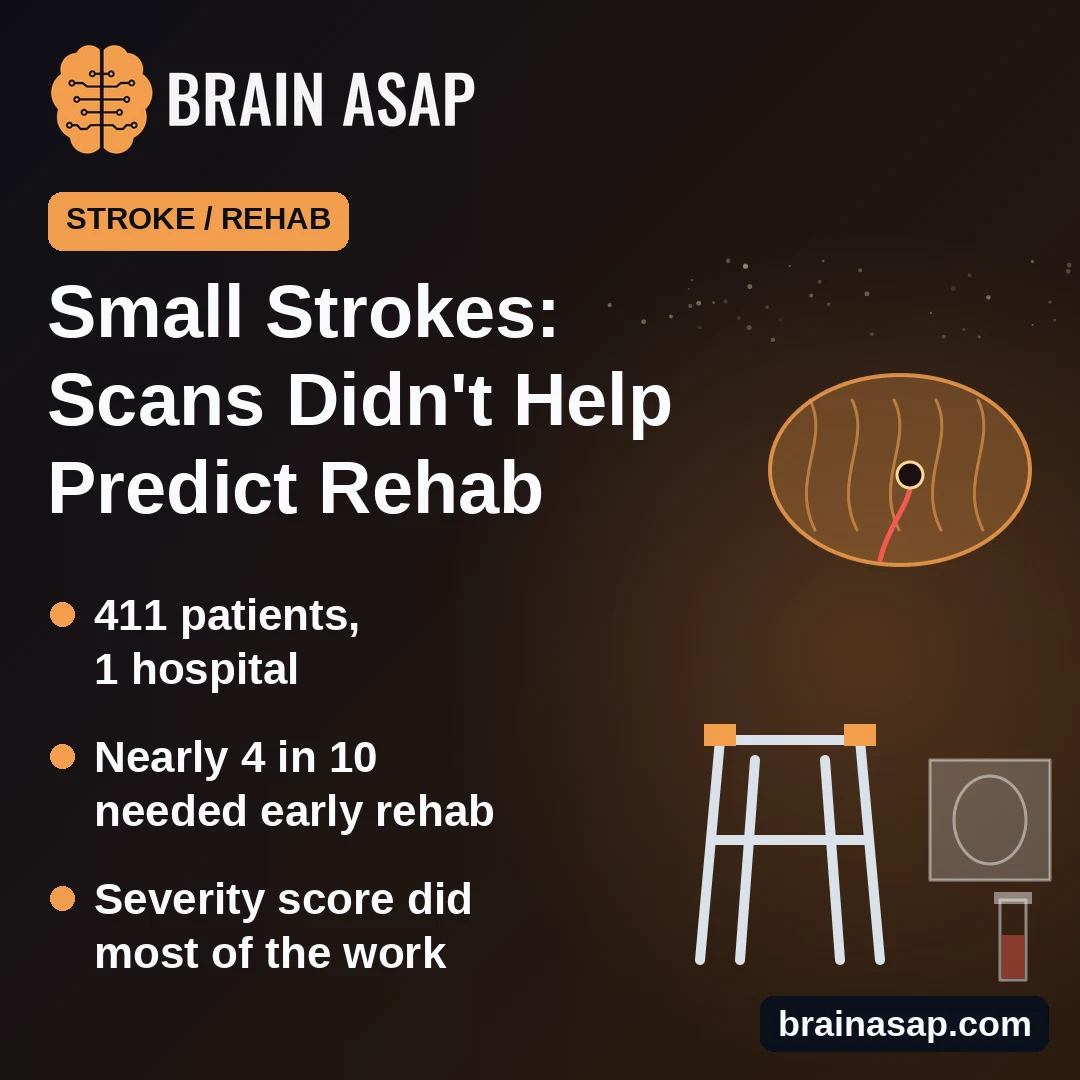
TL;DR: Among 411 people hospitalized for strokes caused by blocked tiny brain arteries, nearly 4 in 10 needed early rehab. Adding MRI brain-damage scores and blood tests to routine bedside information didn't predict who needed it any better. Key Findings 411 p…
Read article ↗