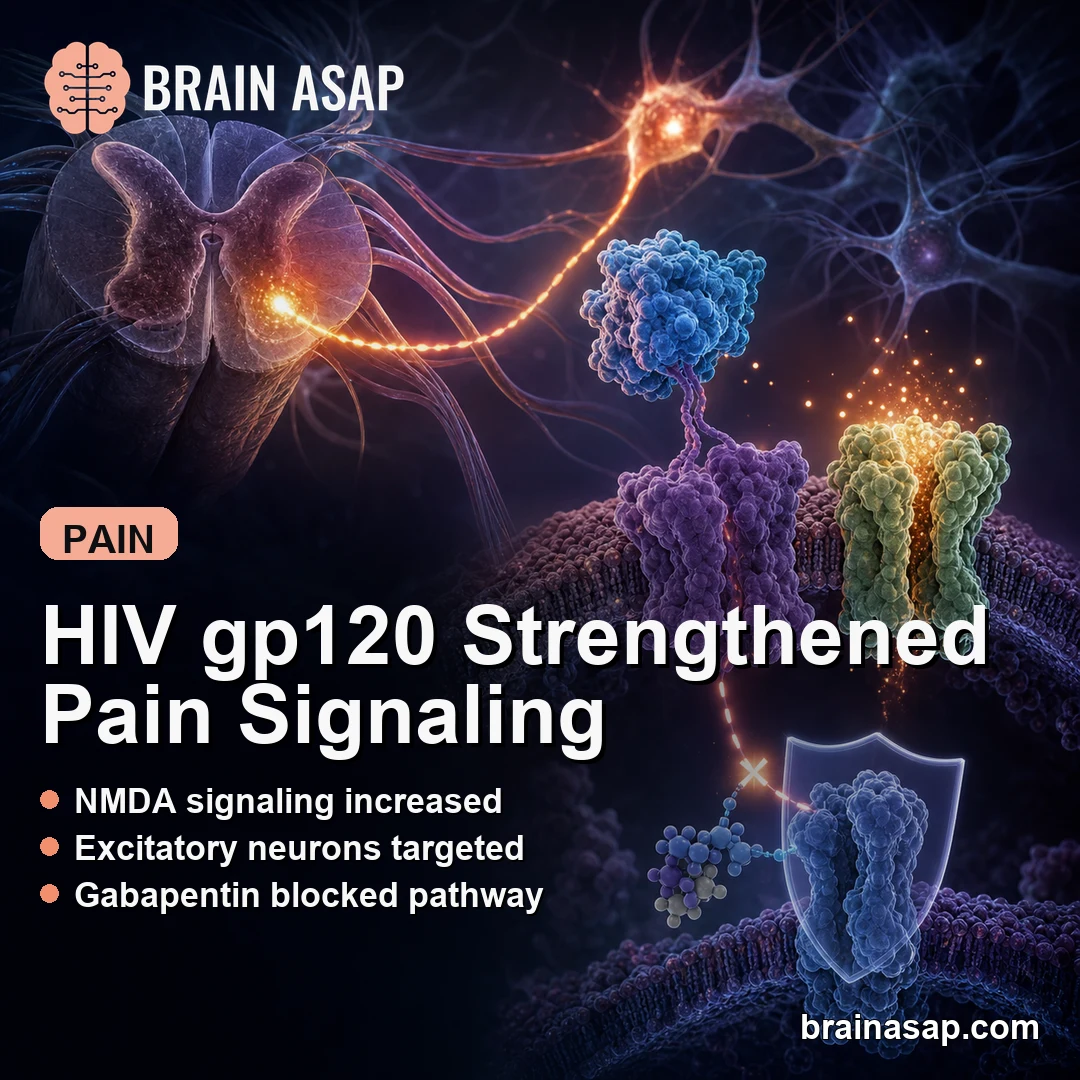
TL;DR: A 2026 mouse study in The Journal of Neuroscience found that the HIV-1 protein gp120 amplified pain signaling through α2δ-1-bound NMDA receptors in spinal excitatory neurons, and blocking that receptor coupling reversed pain-like hypersensitivity. Key F…
Read article ↗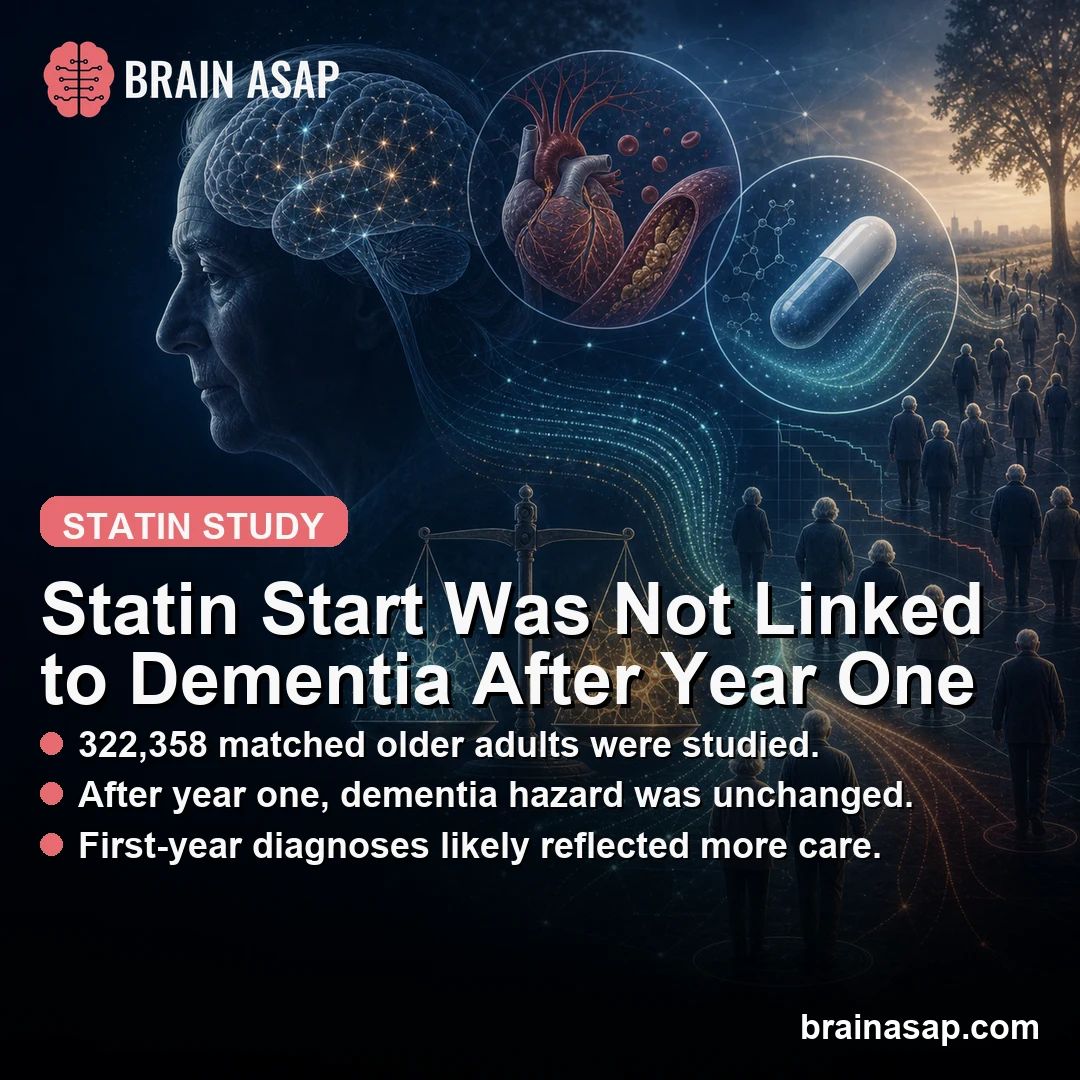
TL;DR: A 2025 study in Neurology used a Kaiser Permanente target-trial emulation and found that starting a statin was not linked to higher or lower Alzheimer disease or related dementia incidence after the first year. The first-year diagnosis increase likely r…
Read article ↗
TL;DR: A 2026 review in CNS Drugs argues that seletracetam, an unapproved SV2A-targeting antiseizure drug, may deserve renewed development as a low-volume intranasal non-benzodiazepine rescue treatment for acute repetitive seizures. Key Findings SV2A racetam:…
Read article ↗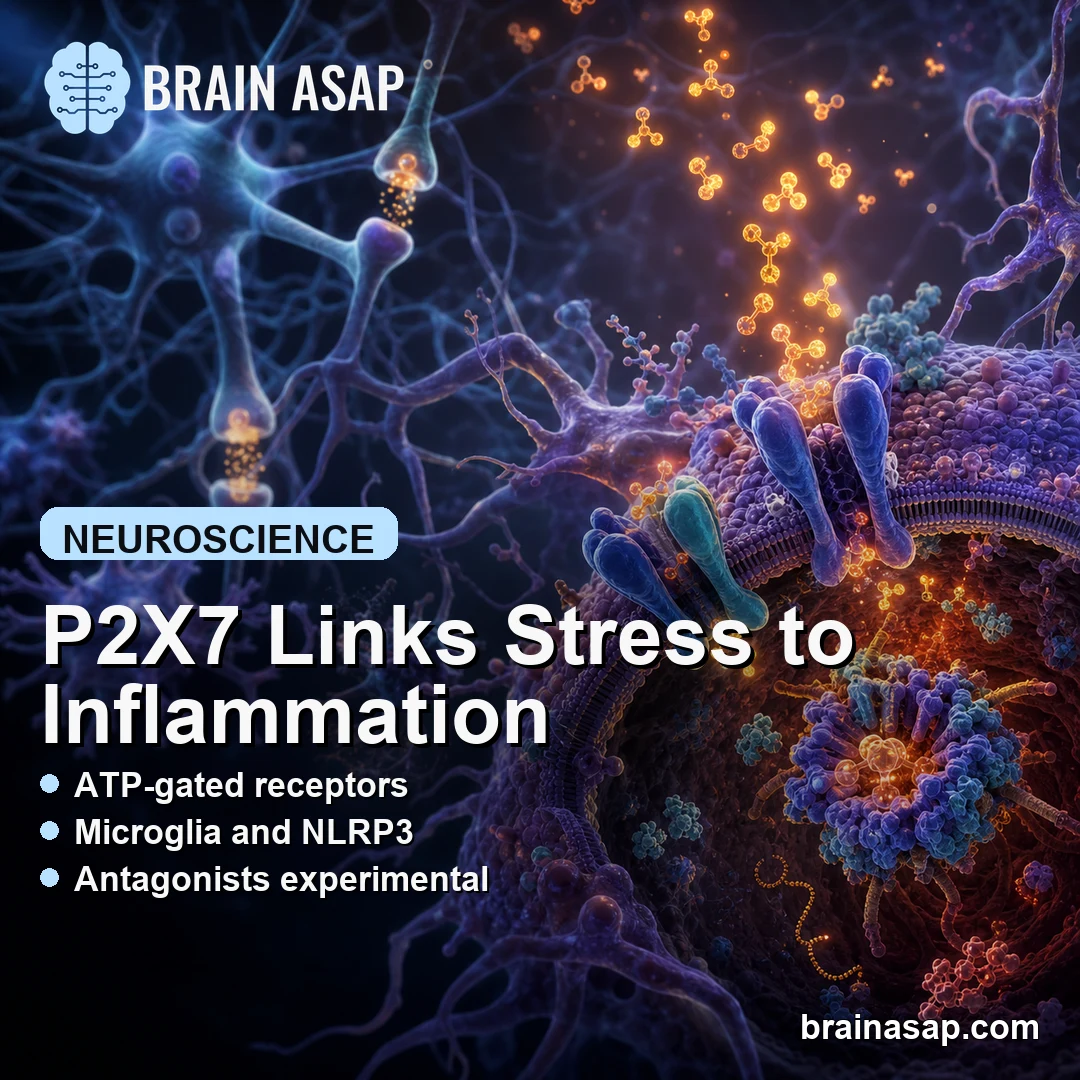
TL;DR: A 2026 review in Purinergic Signalling argues that ATP-gated P2X receptors, especially P2X7 and P2X4, may connect stress-related neuroinflammation with depression and bipolar-disorder biology. Key Findings P2X7 focus: The review describes P2X7 receptor…
Read article ↗
TL;DR: A 2026 systematic review and meta-analysis in BMC Psychiatry reported that olanzapine produced a numerically higher body mass index gain in anorexia nervosa trials, but the pooled randomized evidence remained small, heterogeneous, and not statistically…
Read article ↗
TL;DR: A 2026 open-label feasibility trial in IBRO Neuroscience Reports tested an AI-guided variable levodopa schedule in 5 people with Parkinson’s disease and found 4 patients improved on UPDRS, but the study was far too small and uncontrolled to prove effica…
Read article ↗
TL;DR: A 2026 study in BJPsych Open found that closely monitored antidepressant care improved quality of life and reduced societal costs in both PReDicT and usual-care groups, while the PReDicT algorithm added uncertain, country-dependent economic value. Key F…
Read article ↗
TL;DR: A 2026 systematic review and meta-analysis in Journal of Sleep Research found that agomelatine modestly improved subjective sleep quality versus placebo, but objective total sleep time did not significantly increase and somnolence reports were more freq…
Read article ↗
TL;DR: A 2025 mouse study in eNeuro reported that inhaled cannabidiol reduced IDO and cGAS pathway activity and lowered pro-inflammatory cytokines in male 5XFAD Alzheimer’s model mice. Key Findings 5XFAD model: The study used male 5XFAD transgenic mice, a comm…
Read article ↗
TL;DR: A 2026 narrative review in Journal of Central Nervous System Disease found that glucagon-like peptide-1 receptor agonists have promising stroke-prevention and animal-model evidence, but human data do not yet support routine use as an acute ischemic stro…
Read article ↗