TL;DR: A 2026 Molecular Psychiatry study linked blood-derived microRNAs, short RNA regulators that help control gene expression, to left hippocampal volume and later brain atrophy in adults from the Rhineland Study. Key Findings Baseline MRI cohort: Researcher…
Read article ↗
TL;DR: A 2026 preprint in medRxiv reported that REDDI, an interpretable AI pipeline using resting-state magnetoencephalography (MEG), classified four neurodegenerative diseases with mean balanced accuracy of 0.81. Key Findings The dataset covered four disease…
Read article ↗
TL;DR: A 2026 study in Brain found that creativity in behavioral variant frontotemporal dementia tracked a rostral prefrontal cortex gradient, meaning the functional separation between default-mode and executive-control networks predicted creative performance.…
Read article ↗
TL;DR: A 2026 Molecular Psychiatry study tested Regional Vulnerability Index for Alzheimer’s disease (RVI-AD), a structural-MRI score of how closely a person’s brain pattern resembles amyloid-positive Alzheimer’s disease, and found that higher RVI-AD predicted…
Read article ↗
TL;DR: A 2026 study in Alzheimer’s & Dementia: Translational Research & Clinical Interventions used lecanemab pharmacokinetic/pharmacodynamic modeling in early Alzheimer’s disease and found that blood biomarkers worsened after treatment stopped, while monthly…
Read article ↗
TL;DR: A 2026 descriptive study in JMIR Formative Research reported that the NYUCI-ES dementia-caregiver program required 24 documented cultural adaptations before and during delivery to Chinese and Korean American caregivers. Key Findings 24 adaptation strate…
Read article ↗
TL;DR: A 2026 narrative review in the Japanese Journal of Radiology reported that Alzheimer’s brain positron emission tomography (PET) imaging has shifted from supportive diagnosis toward treatment selection because amyloid PET is now central to confirming eli…
Read article ↗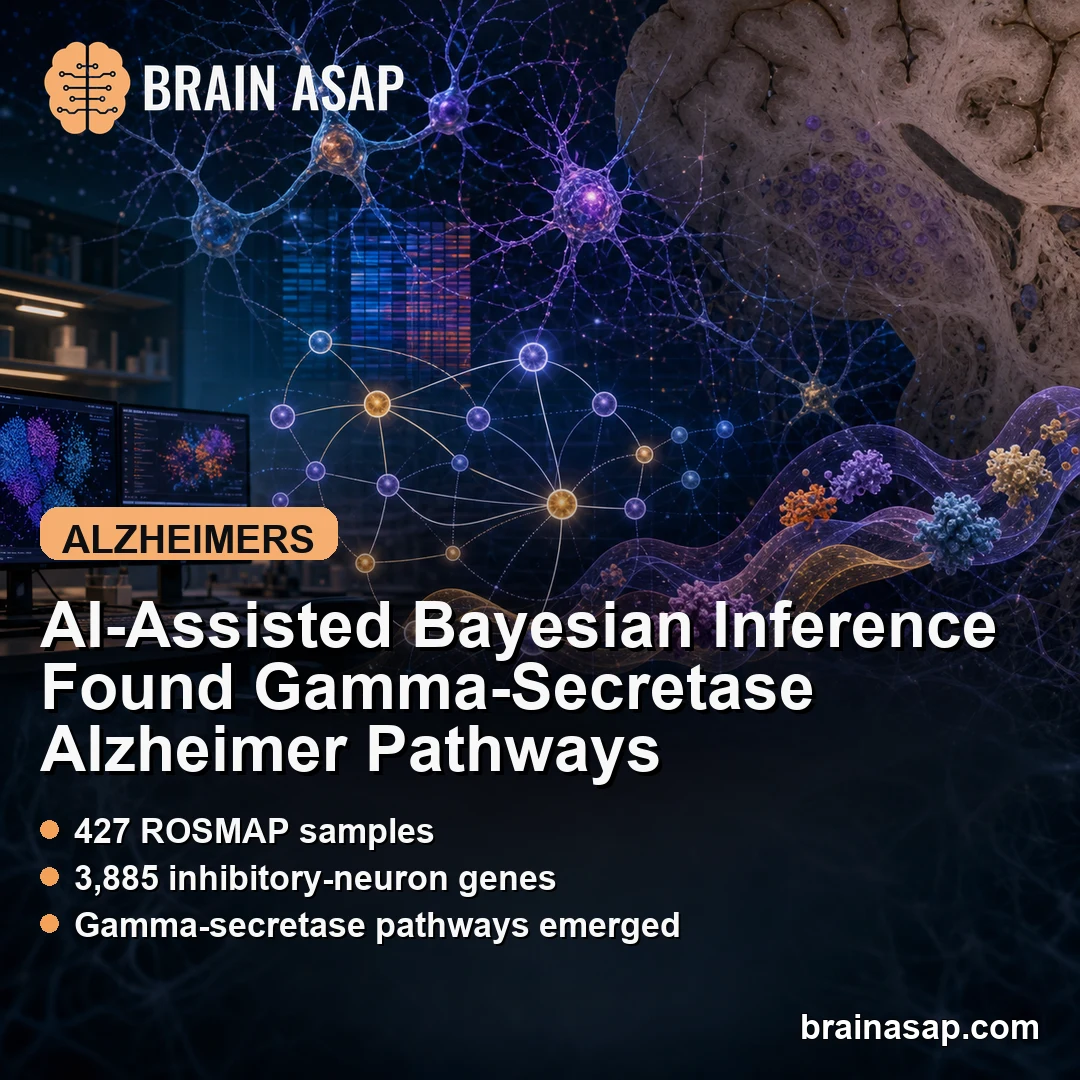
TL;DR: A 2026 medRxiv preprint applied ChatGPT-4o-assisted Bayesian-frequentist hybrid inference to Alzheimer’s single-nucleus RNA-seq data and identified gamma-secretase and HP1 transcription pathways that a no-evidence frequentist setting did not recover. Ke…
Read article ↗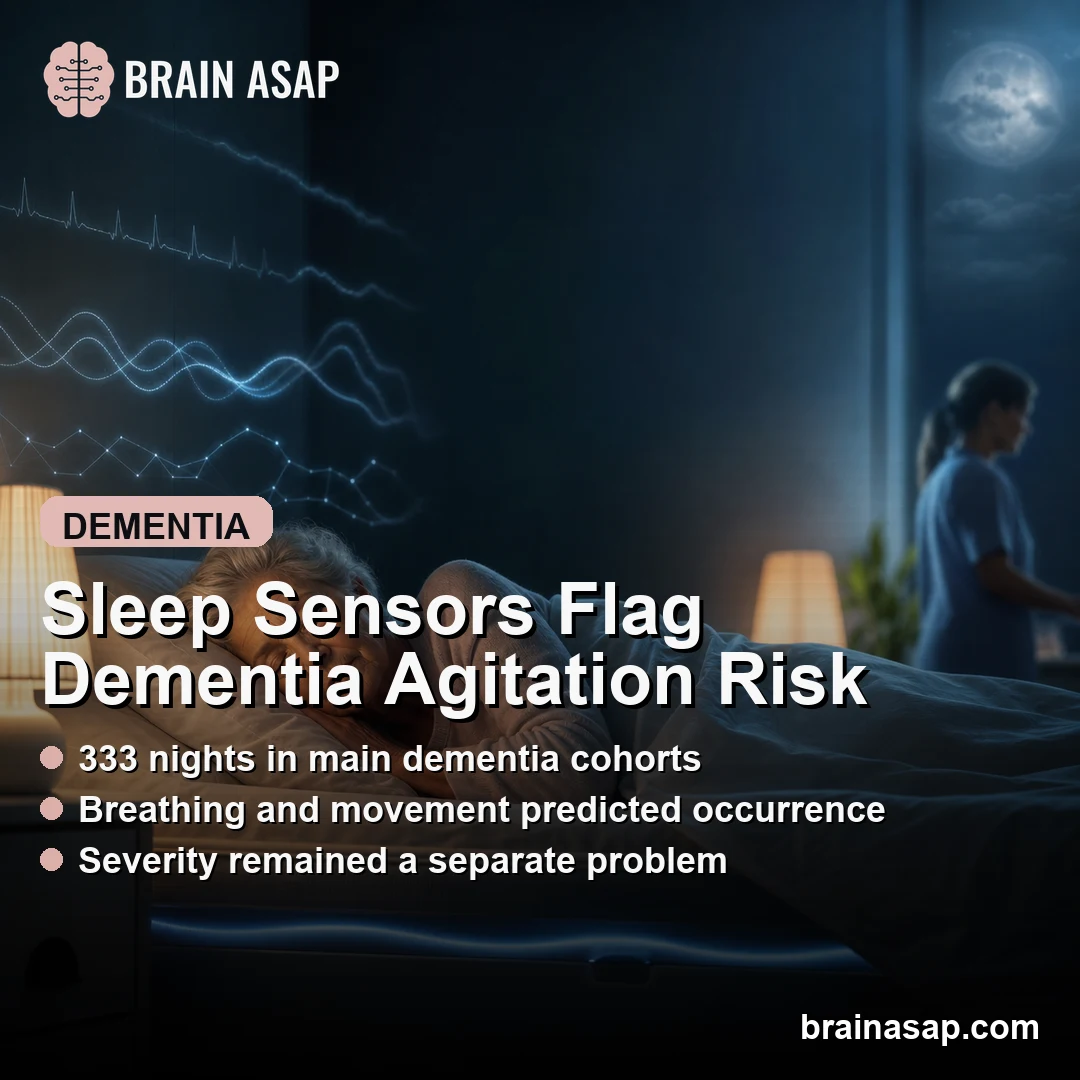
TL;DR: A 2026 preprint in medRxiv found that under-mattress sleep sensors associated lower nighttime respiratory rate and more unstable nighttime movement with higher odds of next-day agitation in dementia, while the same features did not predict how severe ag…
Read article ↗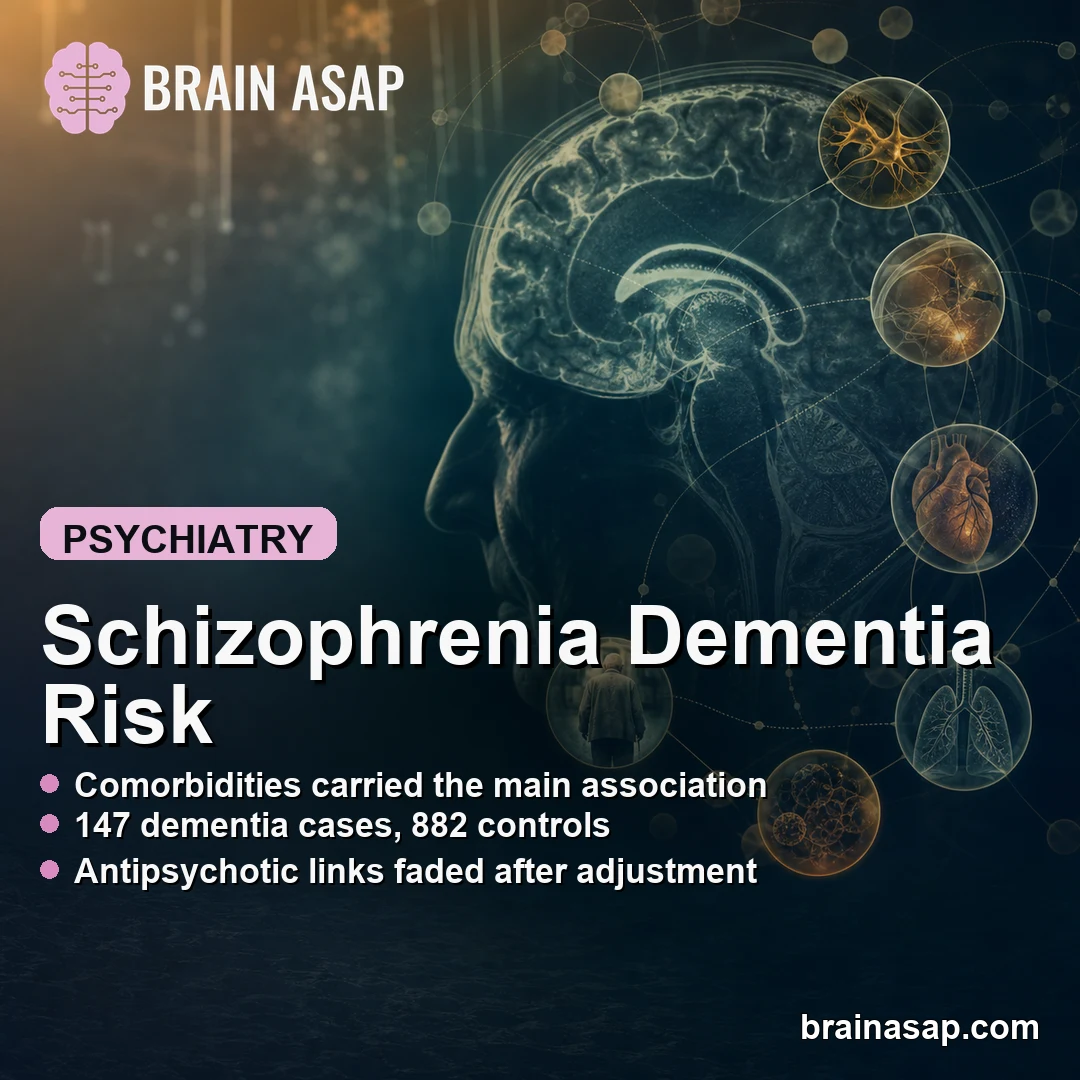
TL;DR: A 2026 study in BMC Psychiatry used Taiwan insurance records to find that dementia in people with schizophrenia was tied more strongly to age and linked medical comorbidities than to antipsychotic exposure after multivariable adjustment. Key Findings 14…
Read article ↗