Maternal COVID Immune Signatures Were Linked to Infant Neurodevelopmental Screening Risk
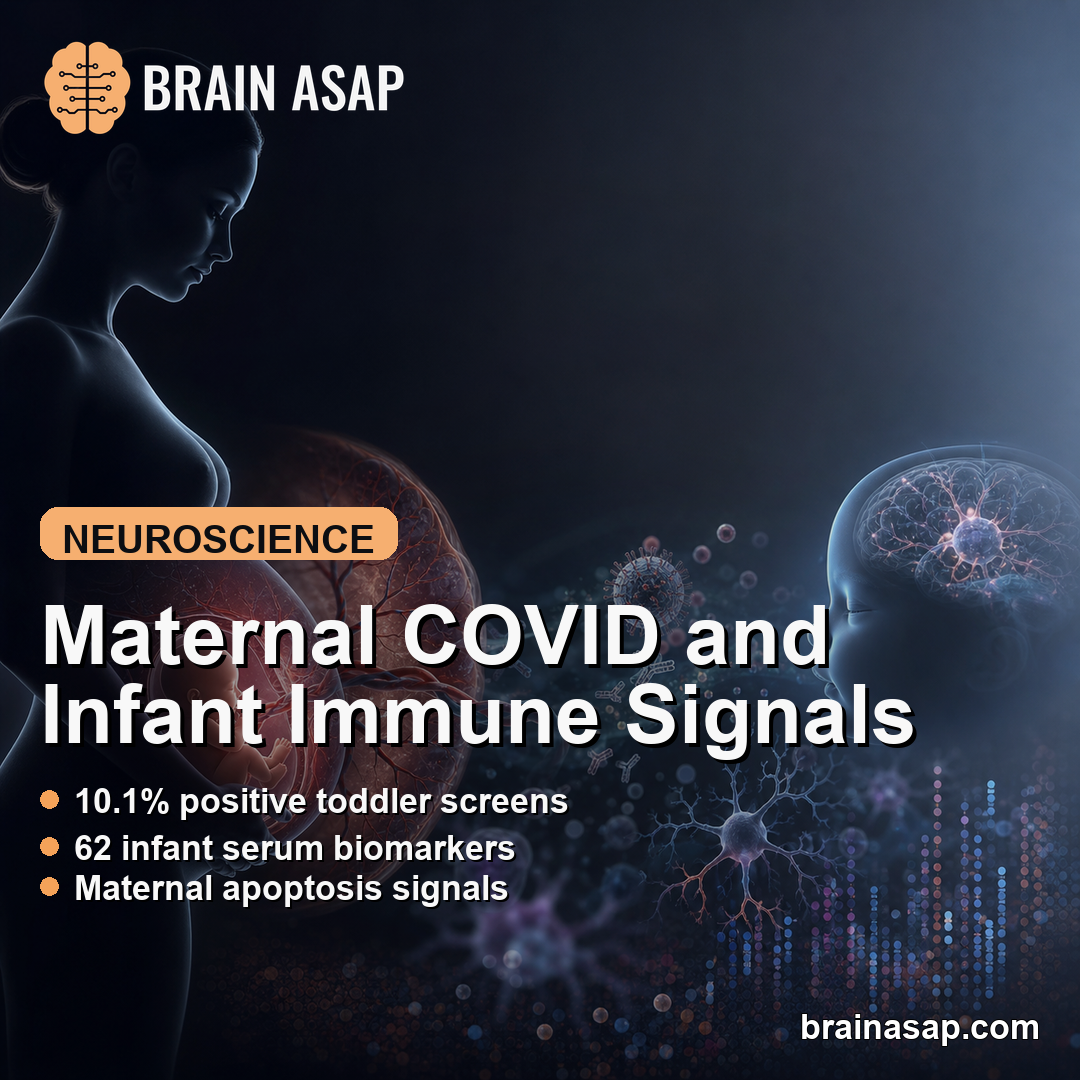
Maternal COVID Immune Signatures Were Linked to Infant Neurodevelopmental Screening Risk

TL;DR: A 2026 Communications Biology study associated maternal SARS-CoV-2 infection during pregnancy with more positive toddler autism-risk screens and newborn immune-protein patterns tied to nicotinamide metabolism, microglial activation, and neutrophil activity. Key Findings Positive M-CHAT-R/F screens, a toddler autism-risk screening result, occurred in 10.1% of 218 SARS-CoV-2-exposed children versus 5.7% of 527 pre-pandemic controls. Earlier …
Read more

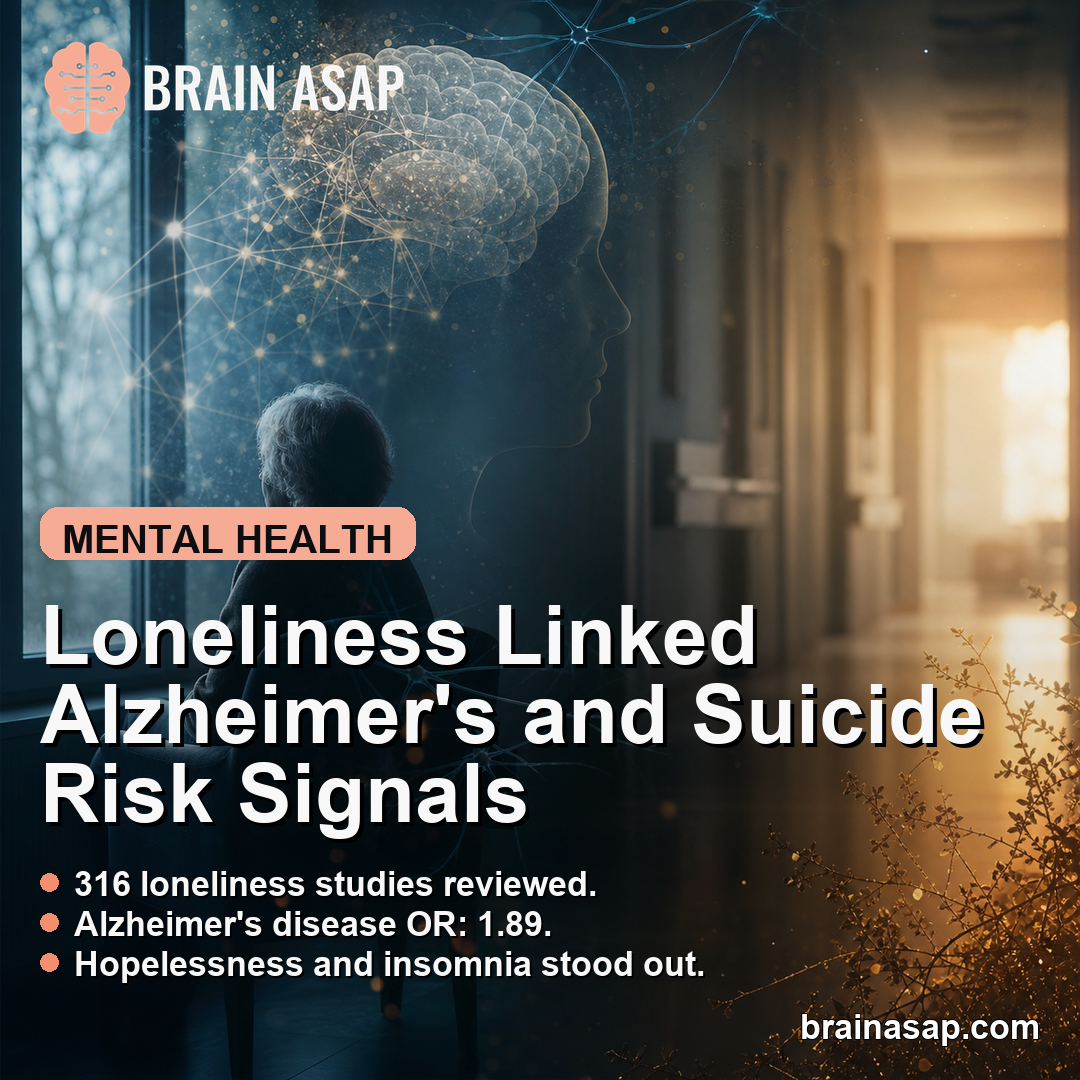
Loneliness Linked Alzheimer’s Disease and Suicide Risk Signals

Loneliness Linked Alzheimer's Disease and Suicide Risk Signals

TL;DR: A 2026 systematic review and meta-analysis in Psychogeriatrics linked loneliness with Alzheimer’s disease and several forms of suicidal behavior, with especially strong shared correlations for hopelessness, insomnia, entrapment, and stress. Key Findings 316 studies reviewed: Researchers found 44 studies on loneliness and Alzheimer’s disease, 261 on loneliness and suicide, and no original study that …

Read more

GLP-1 Receptor Agonists Linked to Small Hypersomnolence Risk Increase

GLP-1 Receptor Agonists Linked to Small Hypersomnolence Risk Increase

TL;DR: A 2026 real-world cohort study in Journal of Diabetes & Metabolic Disorders linked GLP-1 receptor agonists, drugs targeting a glucose-related metabolic hormone pathway, to a higher hazard of new hypersomnolence, but the absolute risk increase was small. Key Findings 237,986 matched patients: The TriNetX analysis compared 118,993 GLP-1 receptor agonist users with 118,993 matched …

Read more

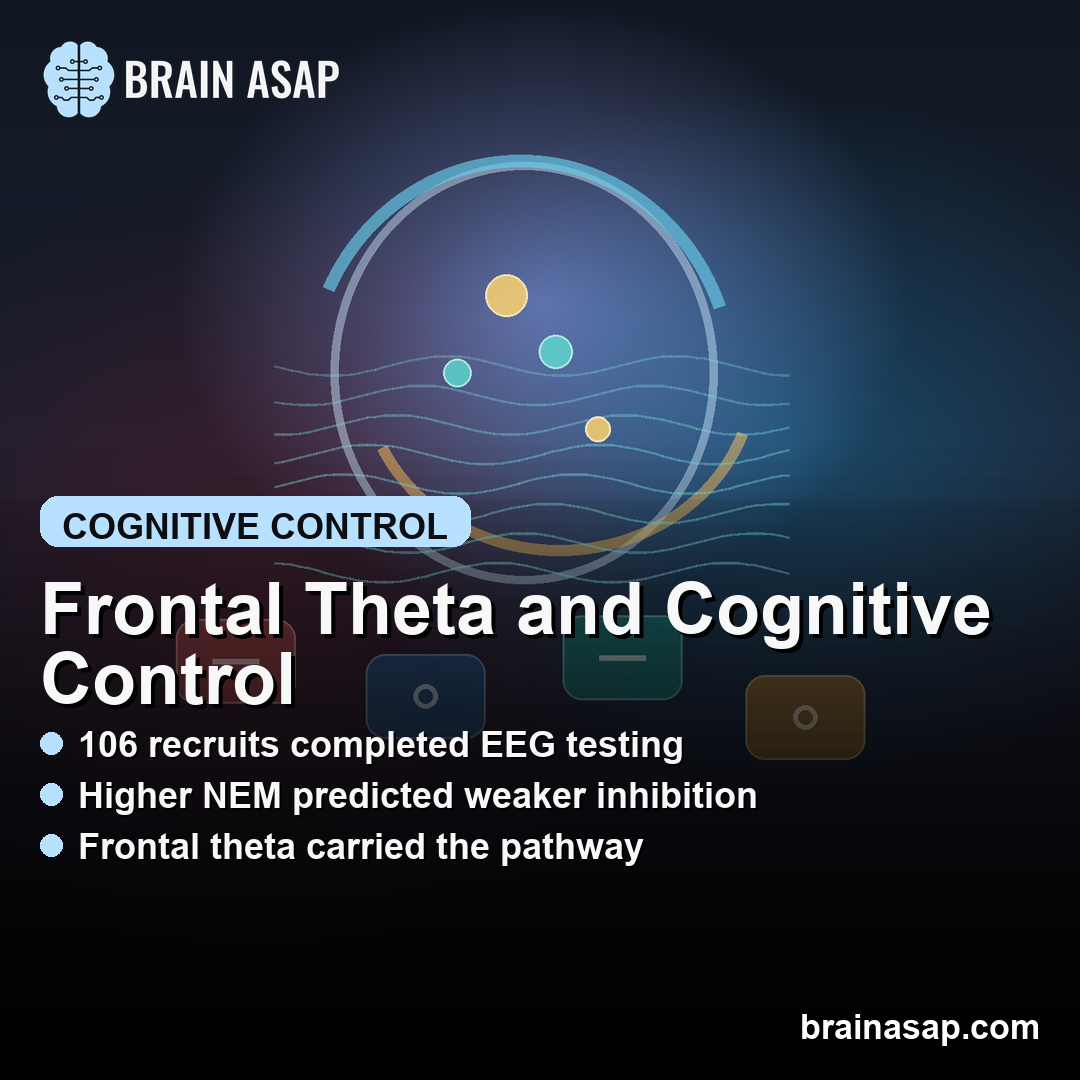
Frontal Midline Theta Linked Negative Emotionality to Weaker Cognitive Control

Frontal Midline Theta Linked Negative Emotionality to Weaker Cognitive Control

TL;DR: A 2026 study in Cognitive, Affective, & Behavioral Neuroscience found that lower frontal midline theta, an EEG marker of cognitive-control engagement, partly explained why young adults with higher negative emotionality performed worse on a Go/No-Go inhibition task. Key Findings 106 young adults completed EEG testing: U.S. Army National Guard recruits performed a Go/No-Go task …

Read more

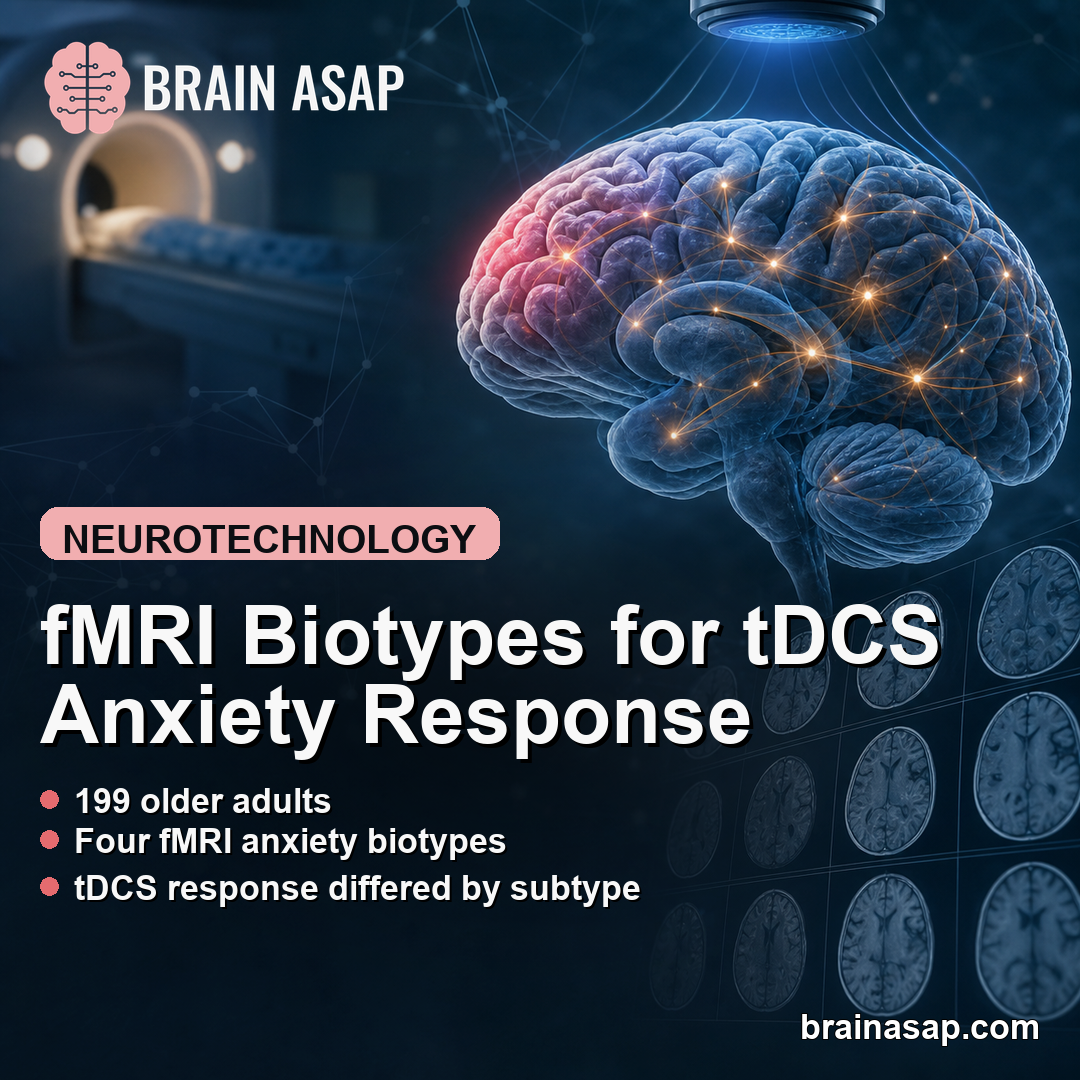
fMRI Biotypes Predicted tDCS Anxiety Response in Alzheimer’s-Risk Adults

fMRI Biotypes Predicted tDCS Anxiety Response in Alzheimer's-Risk Adults

TL;DR: A 2026 preprint on medRxiv used resting-state functional MRI (fMRI), a brain-connectivity scan taken while people are not doing a task, to divide older adults at Alzheimer’s risk into anxiety biotypes that responded differently to frontal-lobe tDCS stimulation. Key Findings Older-adult tDCS trial: The final sample included 199 older adults, with 99 sham tDCS …

Read more

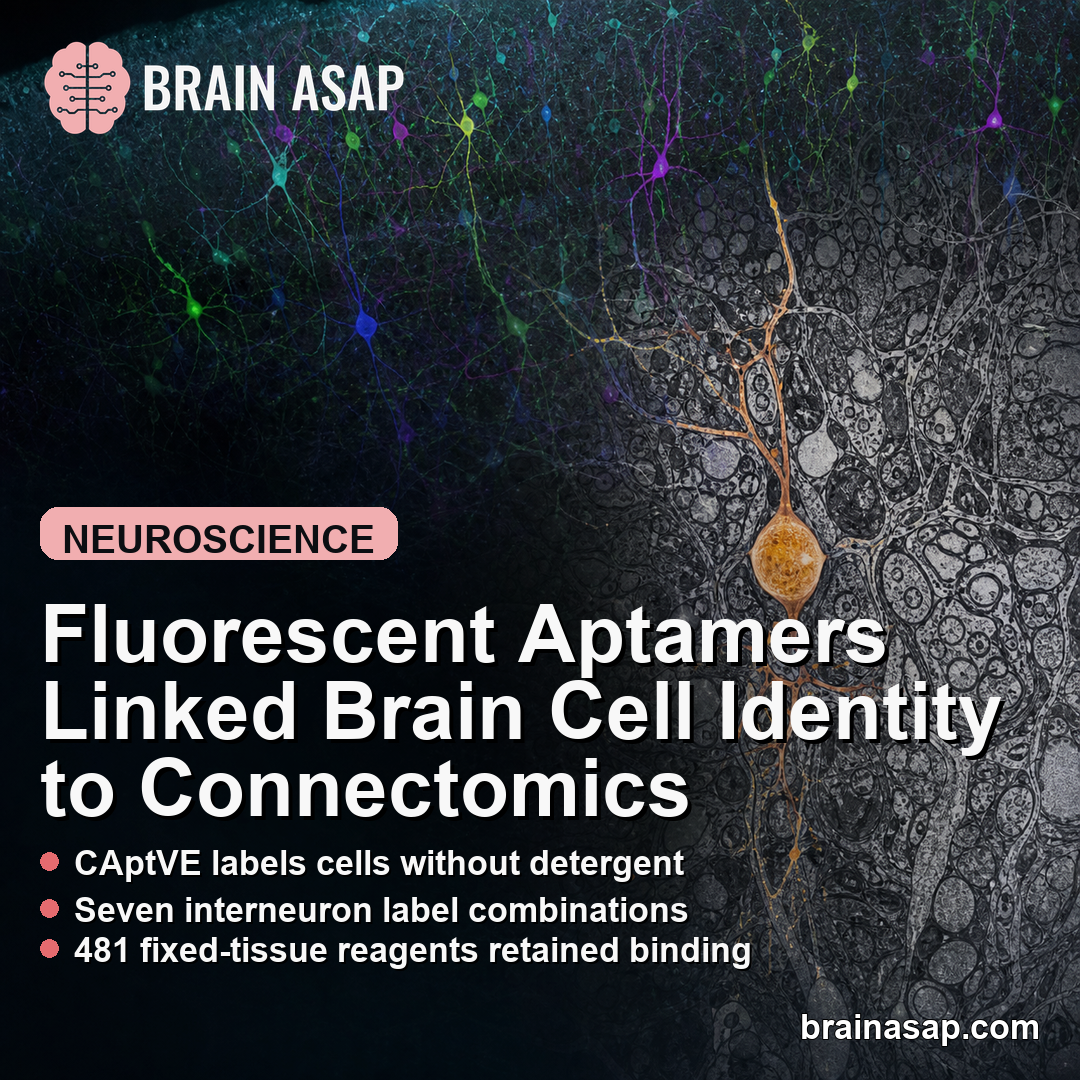
Fluorescent Aptamers Linked Brain Cell Identity to Connectomics

Fluorescent Aptamers Linked Brain Cell Identity to Connectomics

TL;DR: A 2026 Nature Communications paper introduced CAptVE, a fluorescent aptamer method that labels molecular features in mouse brain tissue while preserving ultrastructure for electron-microscopy connectomics. Key Findings Detergent-free labeling: CAptVE used slow off-rate modified aptamers to label brain cells without detergent permeabilization that can disrupt ultrastructure. Three fixation steps: The optimized pipeline balanced fluorescence …

Read more

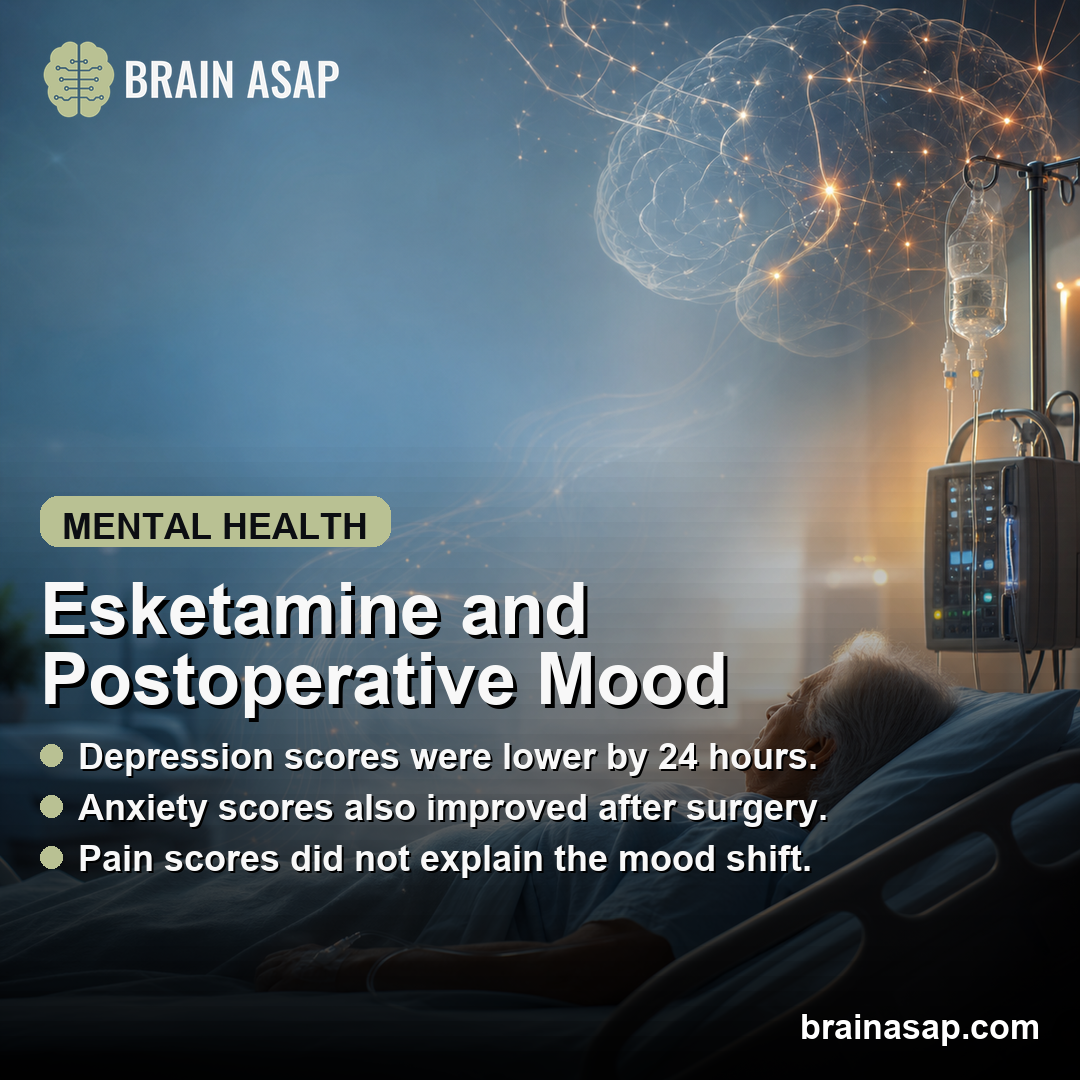
Esketamine-Sufentanil PCA Reduced Postoperative Depression Scores

Esketamine-Sufentanil PCA Reduced Postoperative Depression Scores

TL;DR: A 2026 randomized trial in Scientific Reports found that adding esketamine to sufentanil patient-controlled analgesia lowered short-term postoperative depression and anxiety scores in elderly colorectal cancer surgery patients, without improving pain scores or increasing adverse events. Key Findings Three randomized groups: 91 older colorectal cancer surgery patients completed follow-up after assignment to sufentanil alone, …

Read more

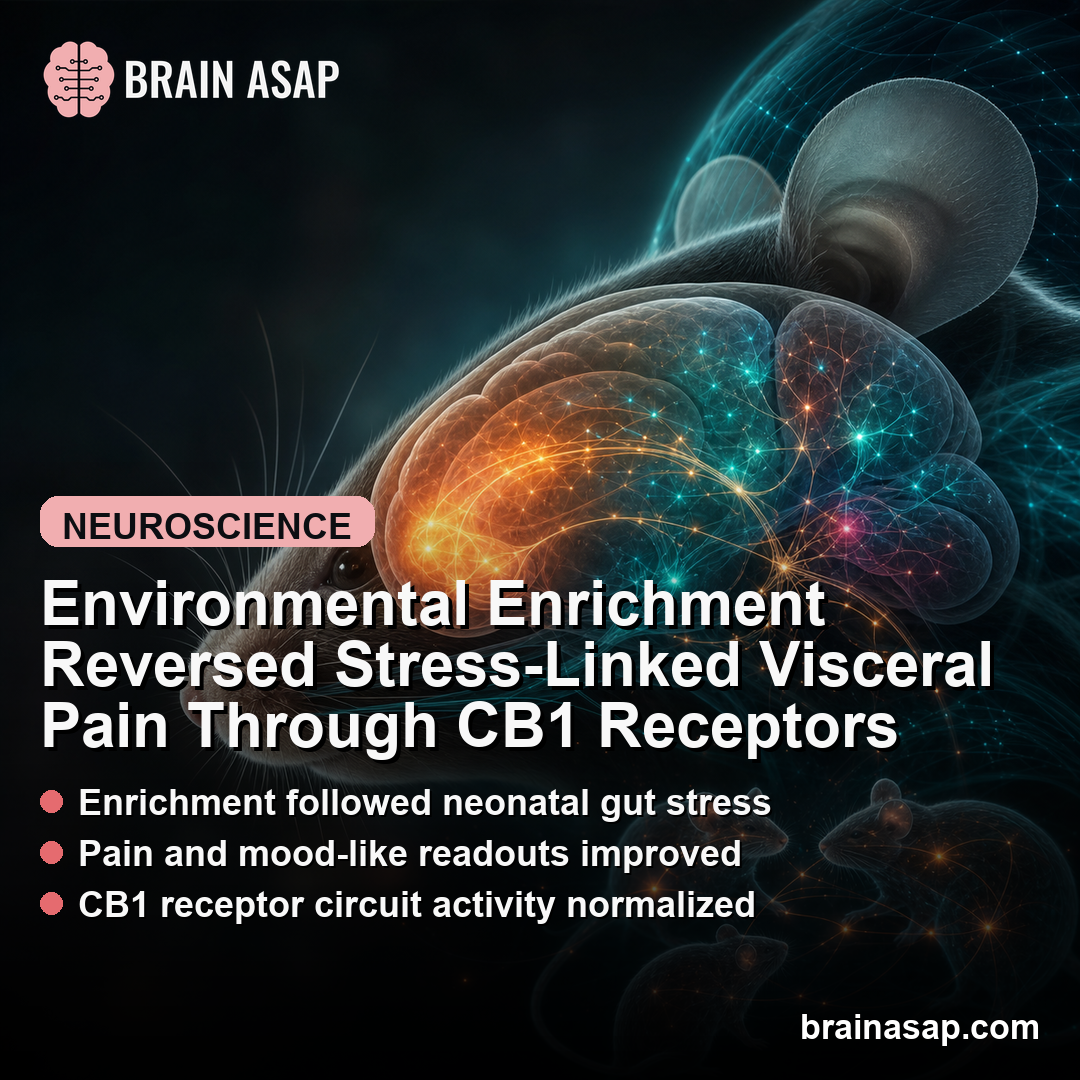
Environmental Enrichment Reversed Stress-Linked Visceral Pain Through CB1 Receptors

Environmental Enrichment Reversed Stress-Linked Visceral Pain Through CB1 Receptors

TL;DR: A study in Communications Biology found that environmental enrichment, richer housing with objects, running space, and novelty, reduced early-life-stress-linked visceral pain and depression-like behavior in rats while normalizing a CB1 receptor-sensitive prefrontal-limbic stress circuit. Key Findings Early stress model: Researchers used neonatal colorectal distension (CRD), a controlled early-life gut stressor, in male and female …

Read more

Depression Severity Linked to Brain Energy Landscape State-Transition Entrapment

Depression Severity Linked to Brain Energy Landscape State-Transition Entrapment

TL;DR: A 2026 study in Nature Communications used resting-state functional MRI (fMRI) to link major depressive disorder to more frequent but shorter visits to a salience-dominated brain state. Key Findings Resting-state fMRI compared depression with controls: the analysis included 38 adults with major depressive disorder and 38 healthy controls. Structural-connectivity modeling used a smaller subset: …

Read more

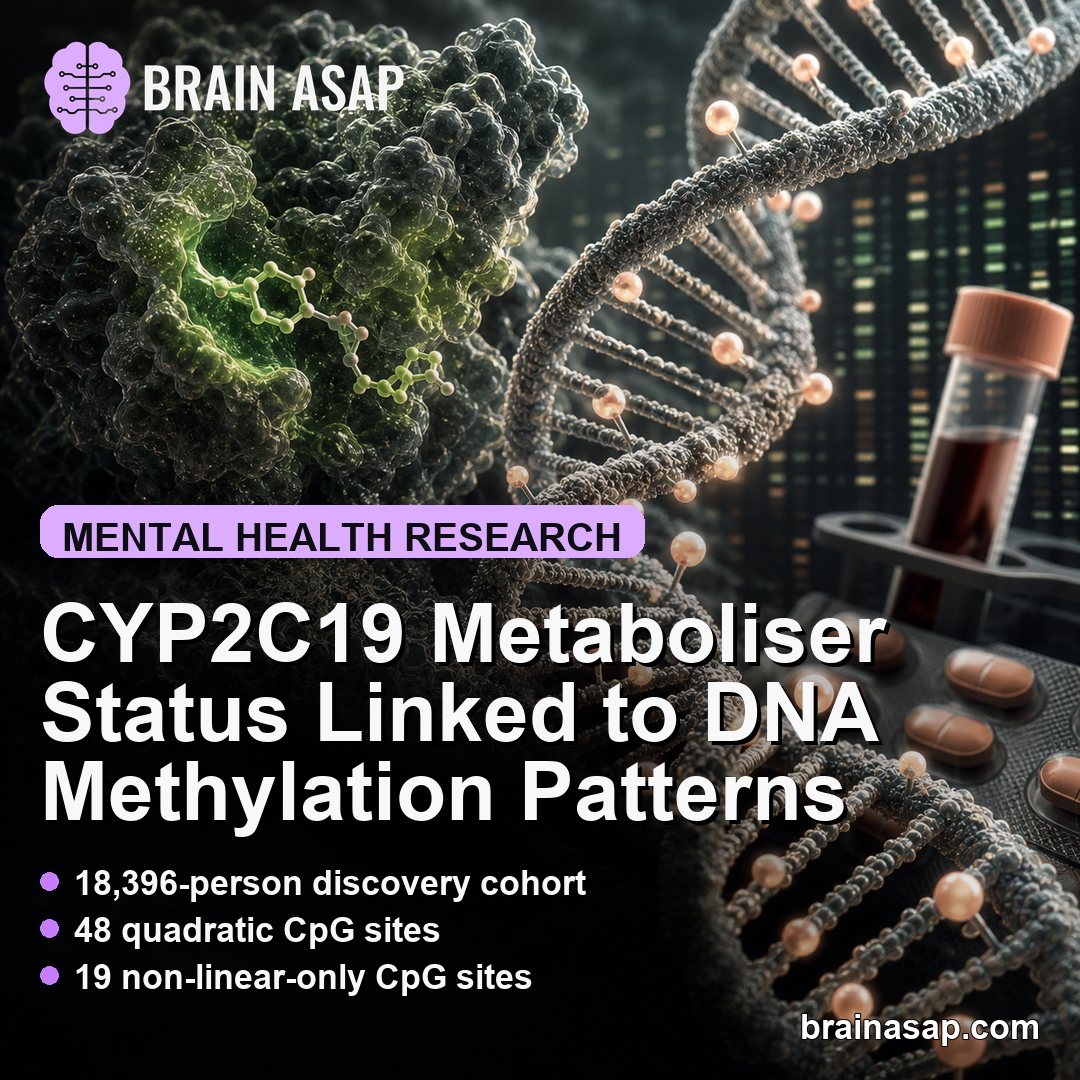
CYP2C19 Metaboliser Status Linked to DNA Methylation Patterns

CYP2C19 Metaboliser Status Linked to DNA Methylation Patterns

TL;DR: A 2026 methylome-wide study in Clinical Epigenetics found that genetically inferred CYP2C19 metaboliser status, a pharmacogenomic marker relevant to antidepressant handling, was associated with DNA methylation patterns in a large Scottish cohort. Key Findings 18,396-person discovery cohort: Generation Scotland supplied the main genetic and DNA methylation analysis for CYP2C19 metaboliser status. 48 quadratic CpG …

Read more