TL;DR: A 2026 study in Acta Neuropathologica Communications used Boolean-network AI analysis of Alzheimer’s RNA-seq data to identify a 40-gene disease signature and validate CgA-KO/PS19 mice as a model of asymptomatic Alzheimer’s-like resilience. Key Findings…
Read article ↗
TL;DR: A 2026 Molecular Psychiatry study linked blood-derived microRNAs, short RNA regulators that help control gene expression, to left hippocampal volume and later brain atrophy in adults from the Rhineland Study. Key Findings Baseline MRI cohort: Researcher…
Read article ↗
TL;DR: A 2026 fly study in IBRO Neuroscience Reports found that long-term rotenone exposure produced stronger survival, climbing, oxidative-stress, and late immune-gene disruption in male Drosophila than in female flies. Key Findings 90 flies per sex were trac…
Read article ↗
TL;DR: A 2026 systematic review posted on medRxiv found that transcranial direct current stimulation (tDCS), a weak noninvasive brain-stimulation method, added to cognitive training produced a small short-term cognitive benefit across 27 trials, but the effect…
Read article ↗
TL;DR: A 2026 iScience study recorded human substantia nigra neurons during Parkinson’s surgery and found that putative dopamine-neuron firing was higher after a prior reward, while the next response was modestly faster. Key Findings Direct human recordings: R…
Read article ↗
TL;DR: A 2026 preprint in medRxiv reported that REDDI, an interpretable AI pipeline using resting-state magnetoencephalography (MEG), classified four neurodegenerative diseases with mean balanced accuracy of 0.81. Key Findings The dataset covered four disease…
Read article ↗
TL;DR: A 2026 study in Brain found that creativity in behavioral variant frontotemporal dementia tracked a rostral prefrontal cortex gradient, meaning the functional separation between default-mode and executive-control networks predicted creative performance.…
Read article ↗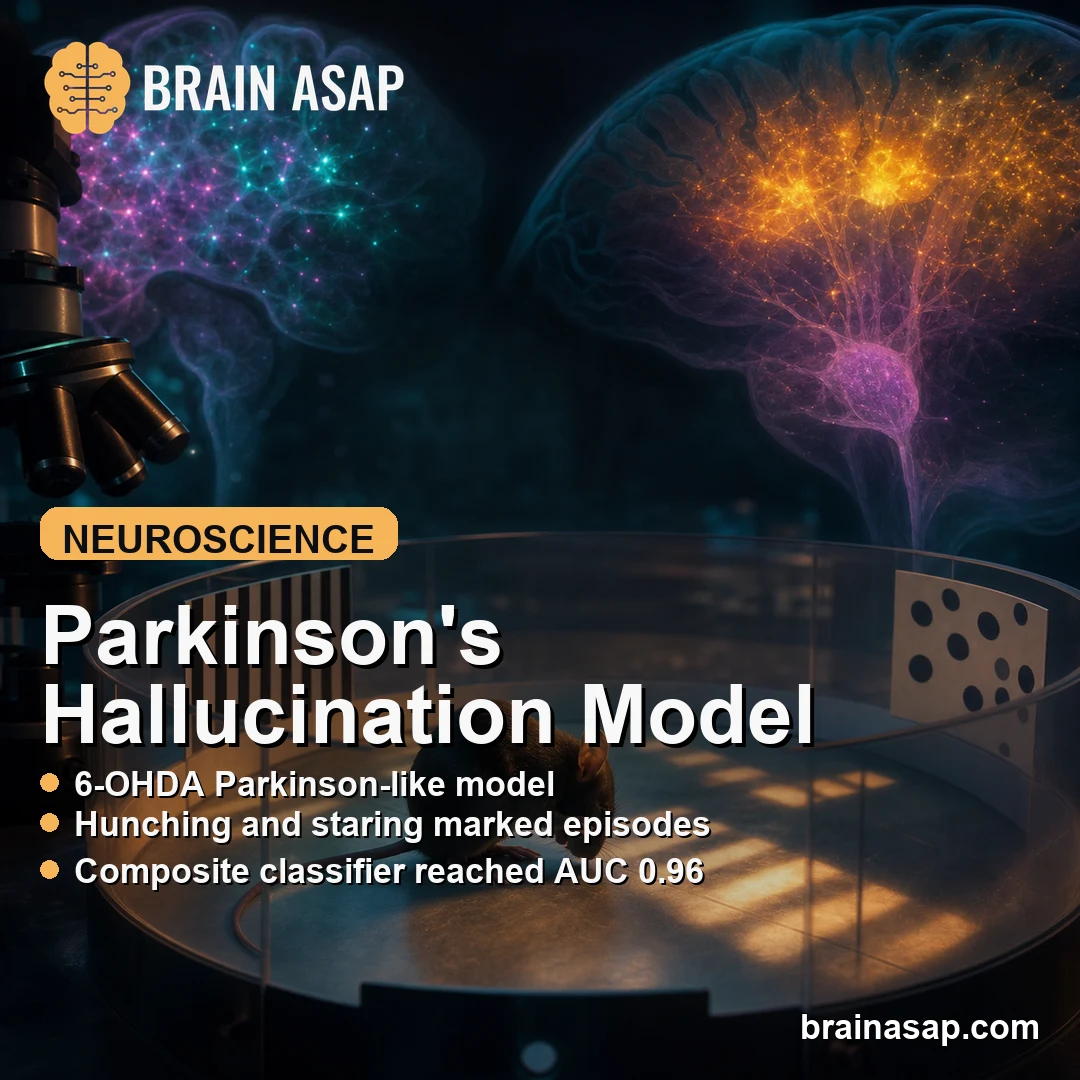
TL;DR: A 2026 study in Signal Transduction and Targeted Therapy built a Parkinson’s visual hallucination mouse model and found that a combined behavior map identified hallucination-like episodes better than any single movement measure. Key Findings Model: Rese…
Read article ↗
TL;DR: A 2026 Molecular Psychiatry study tested Regional Vulnerability Index for Alzheimer’s disease (RVI-AD), a structural-MRI score of how closely a person’s brain pattern resembles amyloid-positive Alzheimer’s disease, and found that higher RVI-AD predicted…
Read article ↗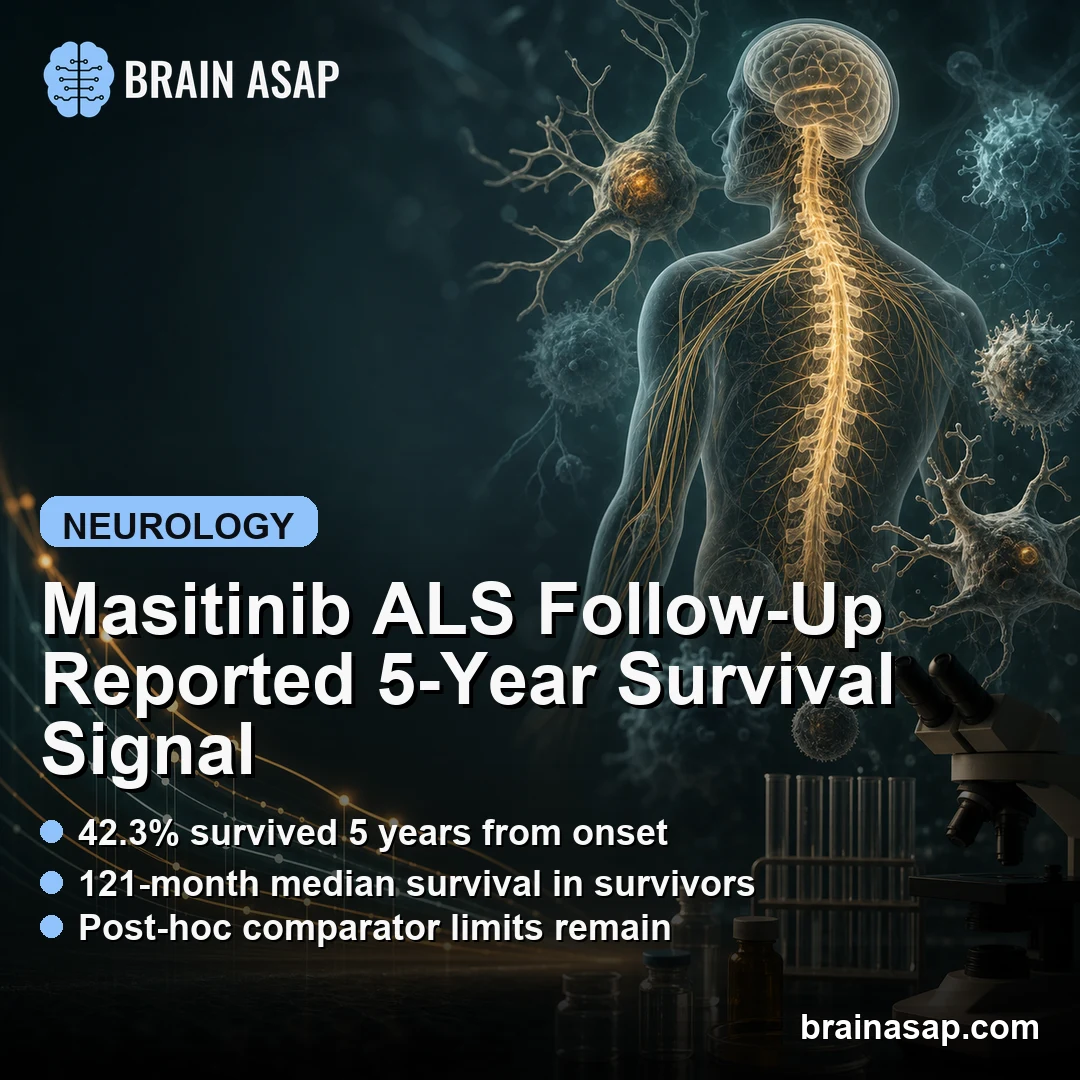
TL;DR: A 2026 medRxiv preprint reanalyzed long-term survivors from the AB10015 ALS trial and reported that masitinib-treated patients had higher 5-year survival than historical benchmarks, but the analysis was post hoc, sponsor-supported, and lacked long-term…
Read article ↗