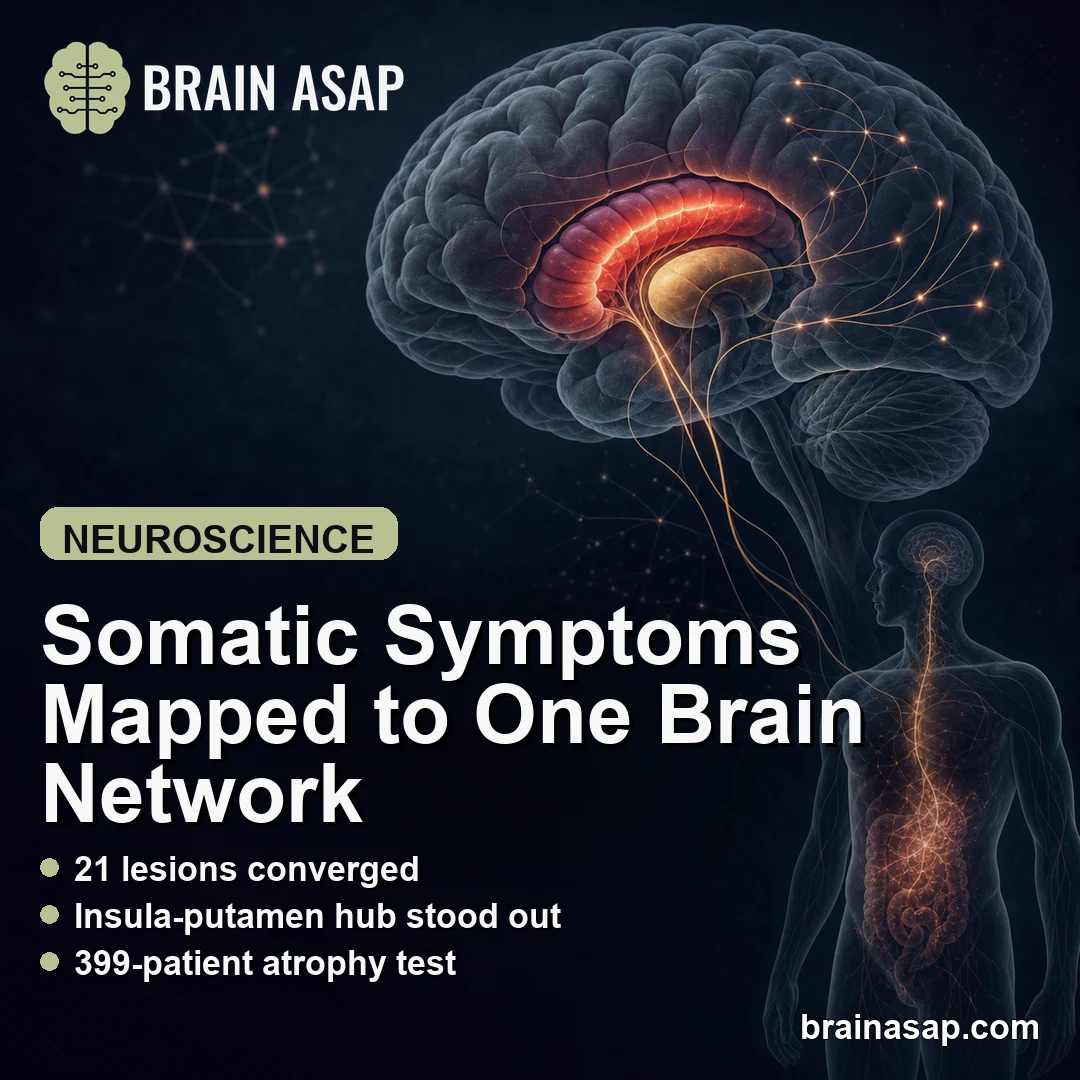
TL;DR: A 2026 study published in BMC Medicine used lesion network mapping to identify a somatic-symptom brain network centered on the right insula and putamen, then linked atrophy inside that network to somatic symptom severity across 399 psychiatric patients.…
Read article ↗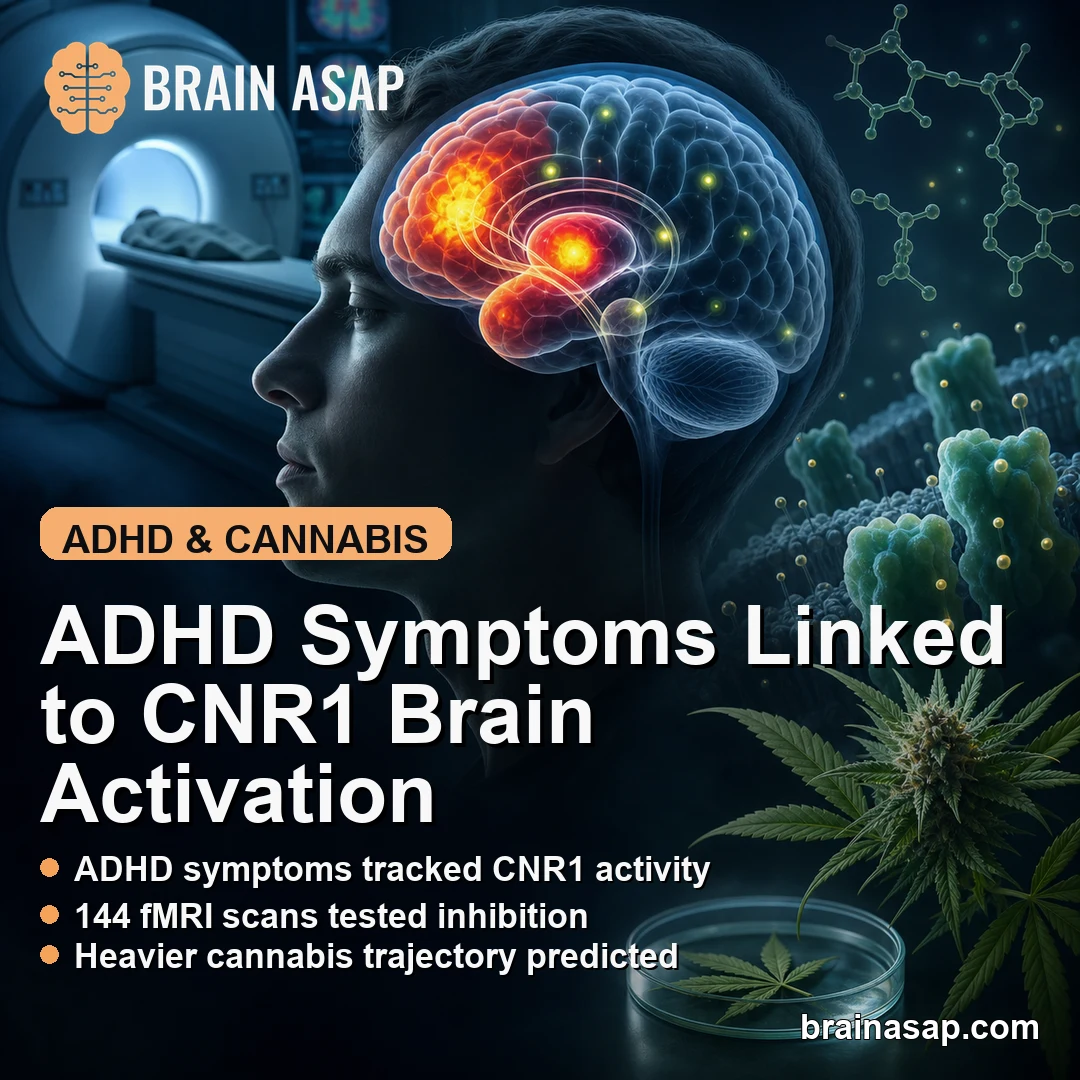
TL;DR: A 2026 medRxiv preprint linked greater attention-deficit/hyperactivity disorder (ADHD) symptom scores in college students to reduced stop-signal functional MRI (fMRI) activation in cannabinoid receptor 1 (CB1R)-rich brain regions, and that reduced activ…
Read article ↗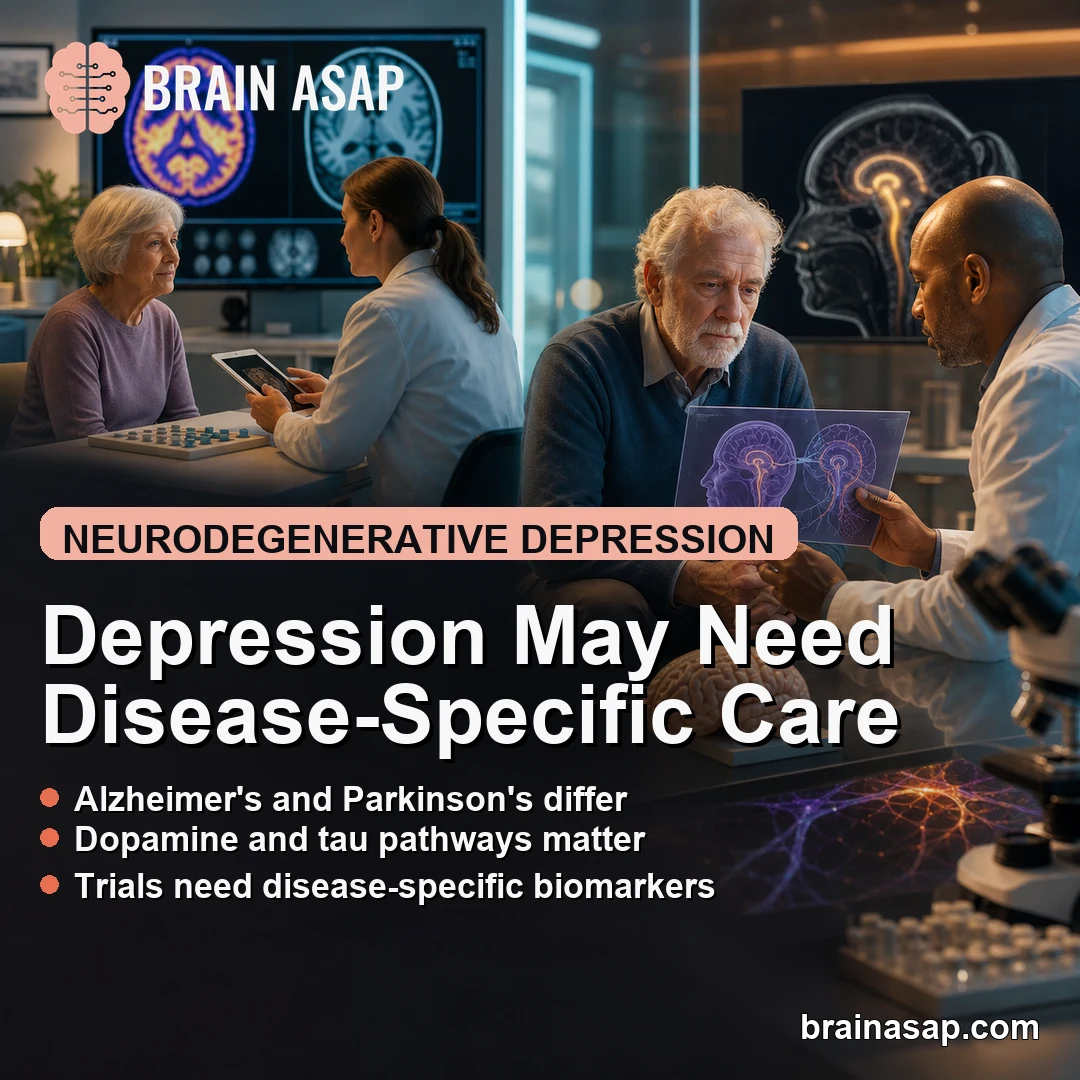
TL;DR: A 2026 narrative review in Molecular Psychiatry argues that depression in Alzheimer’s disease and Parkinson’s disease follows disease-specific brain mechanisms, while standard antidepressant evidence remains weak in these neurodegenerative populations.…
Read article ↗
TL;DR: A 2026 study in International Clinical Psychopharmacology described a 40-year-old man whose dysphoria, anhedonia, amotivation, and fatigue appeared soon after olanzapine was changed to olanzapine-samidorphan and resolved after he returned to olanzapine…
Read article ↗
TL;DR: A 2026 medRxiv retrospective cohort study found that depression often followed bipolar manic or mixed episodes quickly, with 25% of manic episodes and 22% of mixed episodes transitioning to depression within 1 month. Key Findings First-month risk window…
Read article ↗
TL;DR: A 2026 systematic review and meta-analysis in Pain Medicine found that Medicaid enrollment and preoperative benzodiazepine use had the largest pooled associations with new persistent opioid use after surgery among opioid-naive US adults. Key Findings 27…
Read article ↗
TL;DR: A 2026 secondary analysis in Drug and Alcohol Dependence found 4 cannabis craving trajectories during treatment, with the high-craving group showing more positive urine cannabinoid tests and higher baseline anxiety, depression, and obsessive-compulsive…
Read article ↗
TL;DR: A 2026 study in Neuropsychopharmacology found that 30 mg 2C-B produced acute subjective effects in healthy adults that were similar in overall intensity to 125 mg MDMA, shorter and less distressing than 25 mg psilocybin, and less cardiovascularly stimul…
Read article ↗
TL;DR: A 2026 randomized trial posted to medRxiv found that connectivity-guided accelerated intermittent theta-burst stimulation added to inpatient care improved treatment-resistant depression scores more than sham stimulation over 2 weeks. Key Findings 57 ran…
Read article ↗
TL;DR: A 2026 human study in Biological Psychiatry: Global Open Science found that low-intensity focused ultrasound aimed at salience-network hubs improved early skin-conductance habituation to repeated startle sounds, while eye-blink and EEG habituation did n…
Read article ↗