MRI Brain Age Mapped Stroke Recovery in 501 Patients
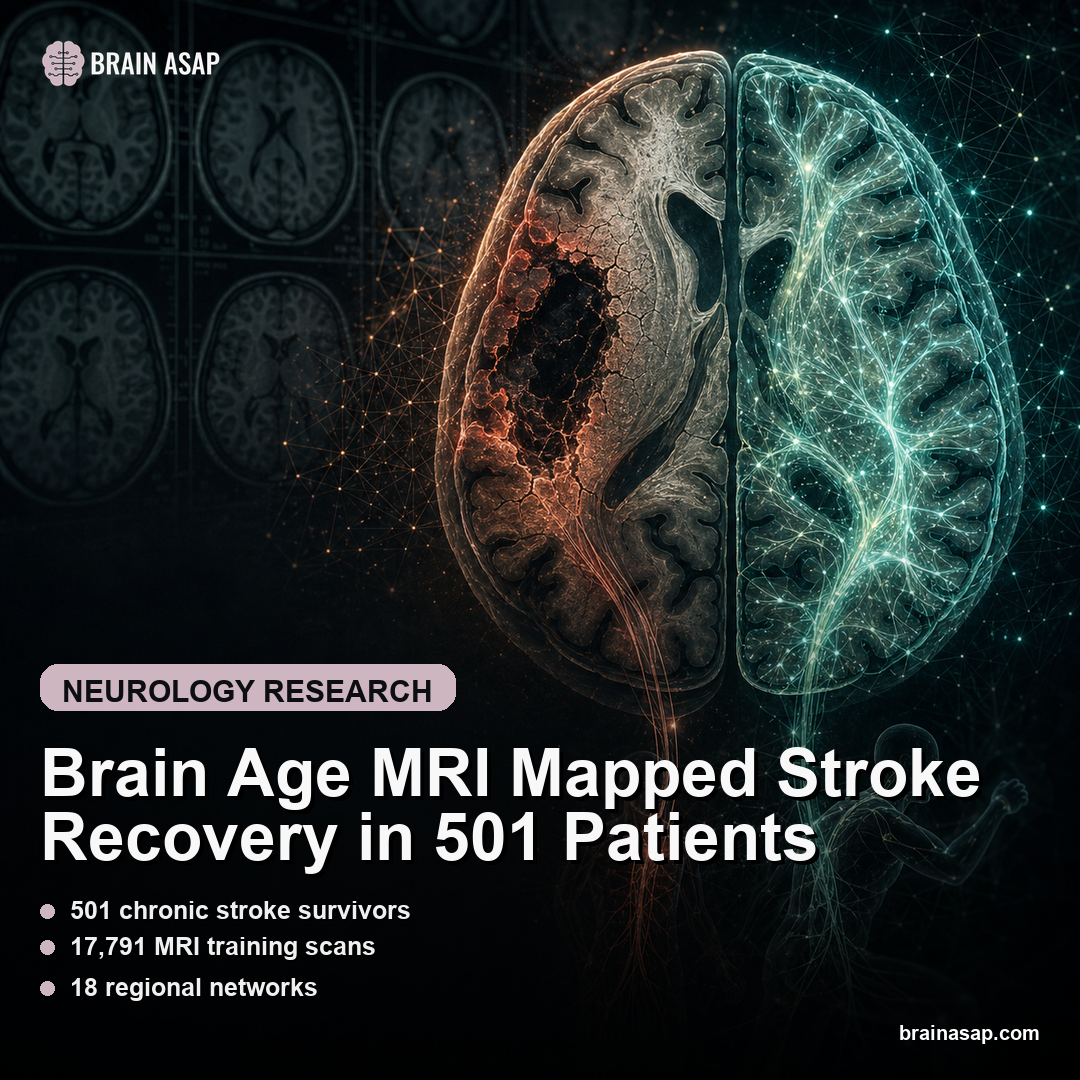
Brain Age MRI Mapped Stroke Recovery in 501 Patients

Brain Age MRI Mapped Stroke Recovery in 501 Patients TL;DR: A Lancet Digital Health ENIGMA study found that larger stroke lesions made the damaged hemisphere look biologically older, while severe motor impairment was linked to younger-appearing contralesional networks, likely reflecting compensation. Key Findings 501 chronic stroke survivors: The ENIGMA Stroke Recovery Working Group dataset included …

Read more

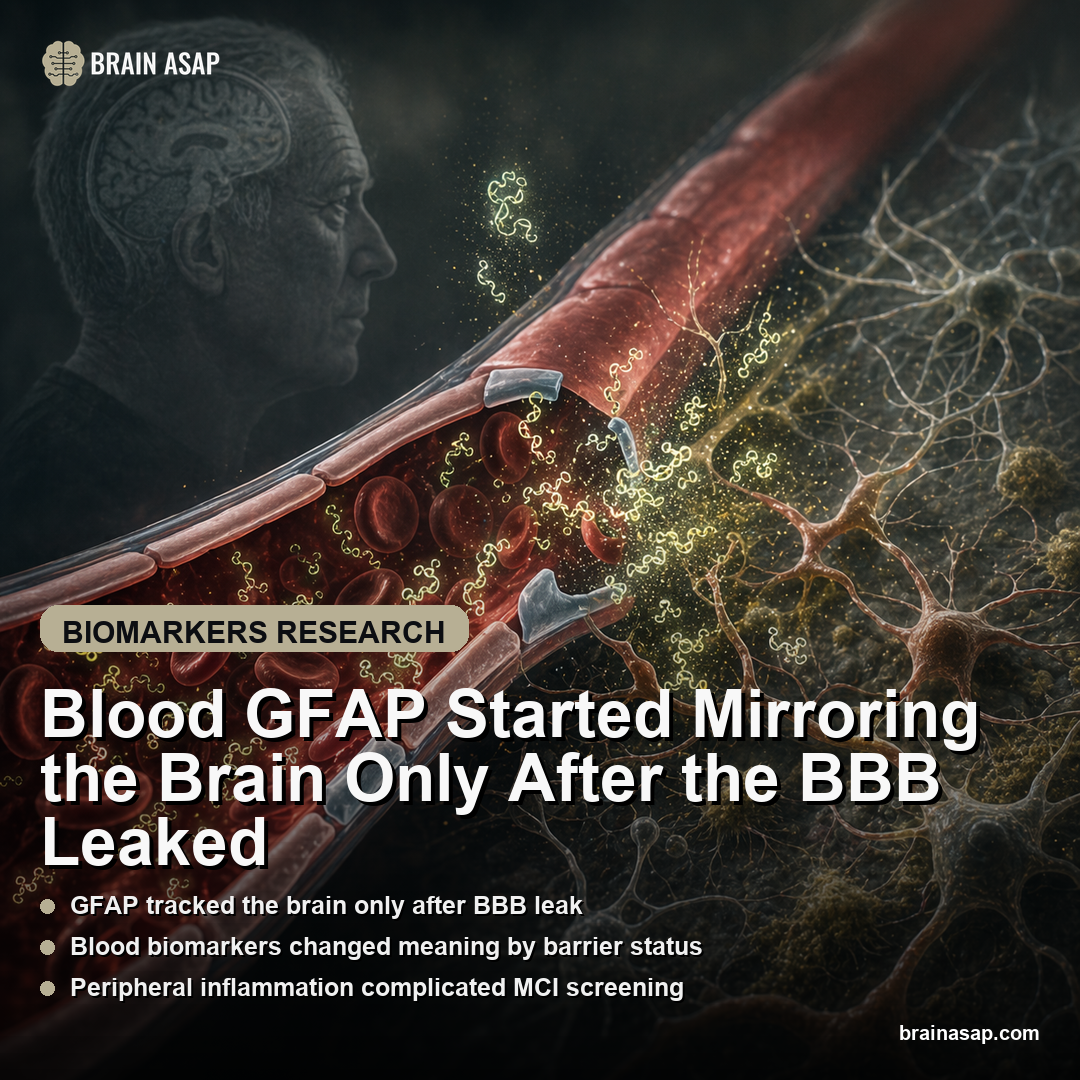
Blood GFAP Tracked Brain GFAP After Blood-Brain Barrier Leak

Blood GFAP Started Mirroring the Brain Only After the BBB Leaked

Blood GFAP Started Mirroring the Brain Only After the BBB Leaked TL;DR: Blood biomarkers mostly failed to mirror the brain while the blood-brain barrier stayed intact; once the barrier leaked, glial fibrillary acidic protein (GFAP), an astrocyte injury protein, and inflammatory signals started lining up across blood and cerebrospinal fluid (CSF), the fluid surrounding the …

Read more

AI Brain Connectivity Biomarkers for Cognition Shifted Across Pipelines

AI Brain Biomarkers Shift When Models Pick Different Features

AI Brain Biomarkers Shift When Models Pick Different Features TL;DR: Across more than 12,000 participants and 13 outcomes, overlooked brain-connectivity features predicted cognition and psychiatric traits nearly as well as top-ranked features, but pointed to different underlying circuits. Key Findings Hidden features held predictive power: The authors tested their idea across HBN, ABCD, HCPD, and …

Read more

CAR Astrocytes Cleared Amyloid in Alzheimer’s Mice

CAR Astrocytes Cleared Amyloid in Alzheimer's Mice

TL;DR: A CAR-style therapy aimed at astrocytes turned brain support cells into amyloid cleaners, preventing plaque development and cutting existing plaque burden by about half in mice. Key Findings Plaque-free prevention arm: Young mice treated before plaques formed were reported plaque-free at nearly 6 months, when untreated Alzheimer-model mice are normally saturated. 50% plaque reduction: …

Read more

Vigorous Exercise Predicted Lower Dementia Risk in UK Biobank Accelerometer Data

Vigorous activity linked to lower dementia risk in UK Biobank accelerometer data

Vigorous Activity Linked to Lower Dementia Risk in UK Biobank TL;DR: In UK Biobank accelerometer data, the vigorous share of daily movement accounted for 32% of dementia’s population-attributable fraction versus just 8% for total activity volume — suggesting brief breathless bursts carry brain-health information that step counts miss. Key Findings Dementia favored intensity over volume: …

Read more

Hearing Aids Beat PSAPs for Speech-in-Noise Listening

Hearing Aids Beat PSAPs Where Real-World Listening Gets Hard

Hearing Aids Beat PSAPs Where Real-World Listening Gets Hard TL;DR: Hearing aids beat personal sound amplifiers where listening gets hardest: high-frequency sound, speech in noise, and daily user satisfaction. Key Findings Hearing aids won the crossover test: Adults with sensorineural hearing loss used either a hearing aid or a PSAP for 3 months, then switched …

Read more

Focused Ultrasound Reprogrammed Microglia in Alzheimer’s Rats

How Focused Ultrasound Reprogrammed Microglia in Alzheimer's Rats

How Focused Ultrasound Reprogrammed Microglia in Alzheimer’s Rats TL;DR: In TgF344-AD rats, repeated low-intensity focused ultrasound triggered a short-lived inflammatory response, then left behind a more durable microglial metabolic shift in early disease without clearly improving Alzheimer’s pathology on its own. Key Findings 450 kPa across a 12 x 6 mm target: The team skull-corrected …

Read more

Low CSF Ethanolamine Linked to Major Depression, Levels Increase After ECT

Ethanolamine Could Be a Depression Biomarker and Treatment Target

Ethanolamine Looked Like a Depression Biomarker and Treatment Target TL;DR: In a 380-person cerebrospinal fluid dataset, patients with active major depression had lower ethanolamine levels than controls, those levels rose after electroconvulsive therapy, and parallel rat experiments suggested the molecule may be more than just a marker. Key Findings 380-person cerebrospinal fluid (CSF), the fluid …

Read more

Brainstem Expiratory Neurons Drove Neurogenic Hypertension

Brainstem Expiratory Neurons Drove Hypertension

Brainstem Expiratory Neurons Drove Hypertension TL;DR: A brainstem region involved in forceful exhalation also appears to drive blood-vessel constriction, making it a possible target for some forms of neurogenic hypertension. Key Findings A forced-exhalation region joined the pressure mechanism: The lateral parafacial region, normally recruited for strong expiration, was active under hypertensive conditions. Blood-vessel nerves …

Read more

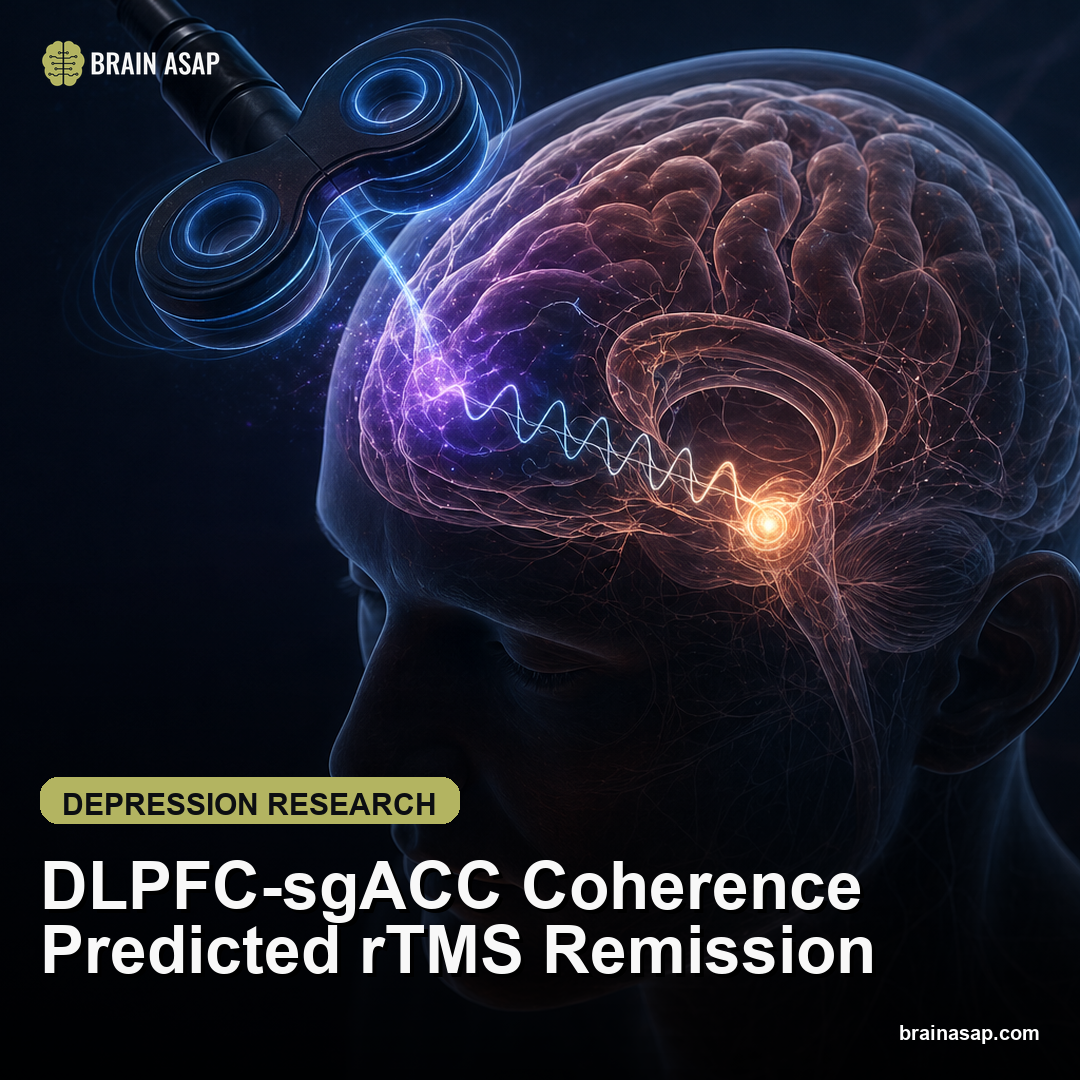
DLPFC-sgACC EEG Connectivity Predicted rTMS Remission in Depression

Brain Circuit Signal Predicted rTMS Remission

DLPFC-sgACC Circuit Signal Predicted rTMS Remission TL;DR: Before starting rTMS, patients who later remitted from depression showed lower alpha-band connectivity flowing from the DLPFC to the subgenual cingulate — pointing toward a measurable EEG marker that could help select candidates before weeks of treatment are spent. Key Findings Remitters had lower pre-treatment DLPFC-to-sgACC alpha connectivity: …

Read more