Naltrexone Weakens Ketamine’s Antidepressant Effects, Revealing an Opioid-Dependent Mechanism

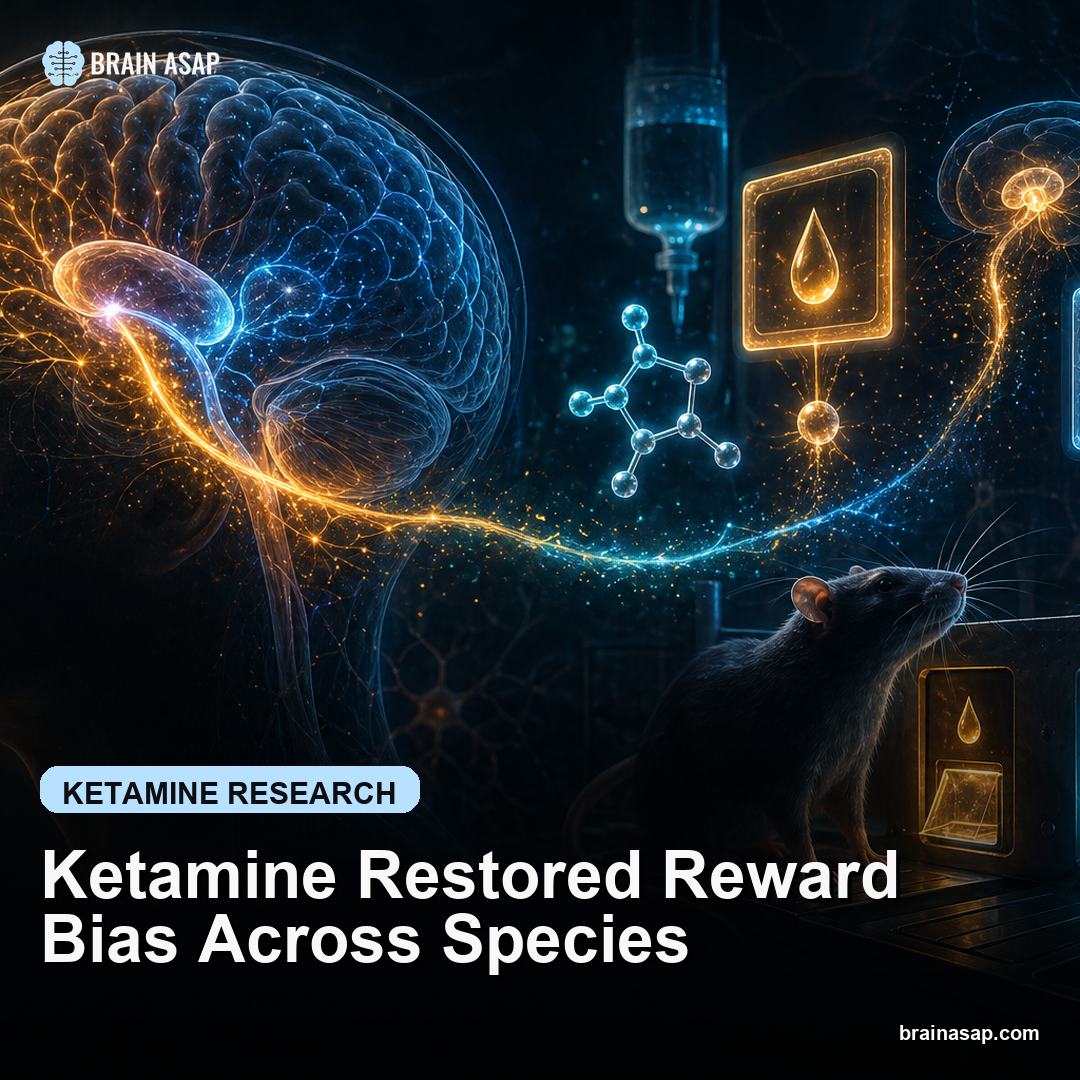
Opioid System Activation is Required for Ketamine’s Antidepressant Effects Ketamine is fast—a single subanesthetic infusion reduces severe depression symptoms within hours, not weeks. But the mechanism remains incompletely understood. For nearly two decades, research assumed glutamate flooding the brain explained everything: ketamine blocks NMDA receptors on inhibitory neurons, releasing the brakes on glutamate release, which …

Read more

Gut Microbiome and Depression in Children: How Missing Amino Acids May Drive the Connection

Dysbiotic Gut Microbiota Depletes Amino Acids and Triggers Depression in Youth Depression in children and adolescents affects 4–5% of youth worldwide, with rates climbing steeply over the past decade. Conventional treatment targets serotonin—but new evidence reveals that’s only half the story. A landmark multi-omics study discovered that depressed youth have depleted plasma amino acids paired …

Read more

A Wireless Brain Implant Smaller Than a Grain of Salt Just Recorded Neurons for an Entire Year

The Tiniest Neural Recorder: How Light-Powered Implants Can Monitor the Brain for a Year TL;DR: A nanometer-scale wireless implant (MOTE) powered by light recorded stable brain activity in mice for a full year without tethers or degradation. Recording brain activity for days is routine. Recording for weeks is impressive. Recording for an entire year from …

Read more

Intranasal Oxytocin May Effectively Treat a Subtype of Autism in Children

A recent study identified that young autistic children with lower clinical severity and greater eye contact are more likely to respond positively to intranasal oxytocin treatment. Highlights: Response Rate: 61.5% of one identified autism subtype responded to oxytocin, compared to only 13.3% of the other subtype. Predictive Measures: Baseline measures of lower initial clinical severity …

Read more

OPRM1 Gene Polymorphisms of A118G SNP Predict Opioid Effects

This study found that individuals with the AG/GG genotype of the A118G SNP in the OPRM1 gene experienced more pleasant and fewer unpleasant effects from hydromorphone compared to those with the AA genotype, suggesting genotype-based differences in opioid sensitivity. Highlights: Positive Effects: Participants with the AG/GG genotype reported significantly more positive effects (e.g., good effects, …

Read more

Cannabis (Marijuana) Addiction Linked to Altered Brain Connectivity (2024 Study)

Individuals at risk for cannabis use disorder (CUD) exhibit increased dynamic fluidity and altered connectivity patterns in brain networks, suggesting early changes in brain function that may contribute to cannabis addiction risk. Highlights: At-risk individuals for cannabis addiction show a greater number of meta-states and more frequent transitions between them, indicating higher dynamic fluidity in …

Read more

Effects of Alcohol on the Brain’s Dopamine Systems (2023 Review)

Alcohol use disorder (AUD) is associated with impairments in dopamine (DA) neurotransmission, with significant differences in DA release, receptor availability, and transporter density observed across different levels of alcohol consumption and stages of AUD. Highlights: Acute Alcohol Effects: Social drinkers exhibit a dopamine release in the striatum, particularly the ventral striatum, after acute alcohol consumption, …

Read more

Transcranial Direct Current Stimulation (tDCS) of Left Dorsolateral Prefrontal Cortex Seems Effective for Depression & Anxiety (2024 Review)

Transcranial direct current stimulation (tDCS) targeting the left dorsolateral prefrontal cortex (DLPFC) at 2-mA intensity effectively alleviates depressive symptoms and shows promise in reducing anxiety symptoms across various clinical conditions. Highlights: tDCS targeting the left DLPFC significantly reduces depressive symptoms, highlighting it as a transdiagnostic neural mechanism across diverse clinical conditions. The meta-analysis showed that …

Read more

LIT-001 (Oxytocin Receptor Agonist) Alters Pair Bonding in Prairie Voles (2024 Study)

A small-molecule oxytocin receptor-specific agonist, LIT-001, differentially affects the acquisition and expression of partner preference in prairie voles, enhancing bonding when administered before cohabitation but inhibiting it when given afterward. Highlights: LIT-001 Enhances Bonding Pre-Cohabitation: Administration of LIT-001 (10 mg/kg) before a 4-hour cohabitation period facilitated the acquisition of partner preference in male prairie voles. …

Read more

Retina Thinning Linked to Parkinson’s Disease: Potential Diagnosis via Optical Coherence Tomography (2024 Study)

Optical coherence tomography (OCT) reveals significant retinal nerve fiber layer (RNFL) thinning in Parkinson’s disease (PD) patients, correlating with disease severity and suggesting OCT as a potential biomarker for PD diagnosis and monitoring. Highlights: RNFL Thinning: Parkinson’s disease patients exhibit significant thinning of the retinal nerve fiber layer (RNFL) compared to non-PD individuals (p = …

Read more